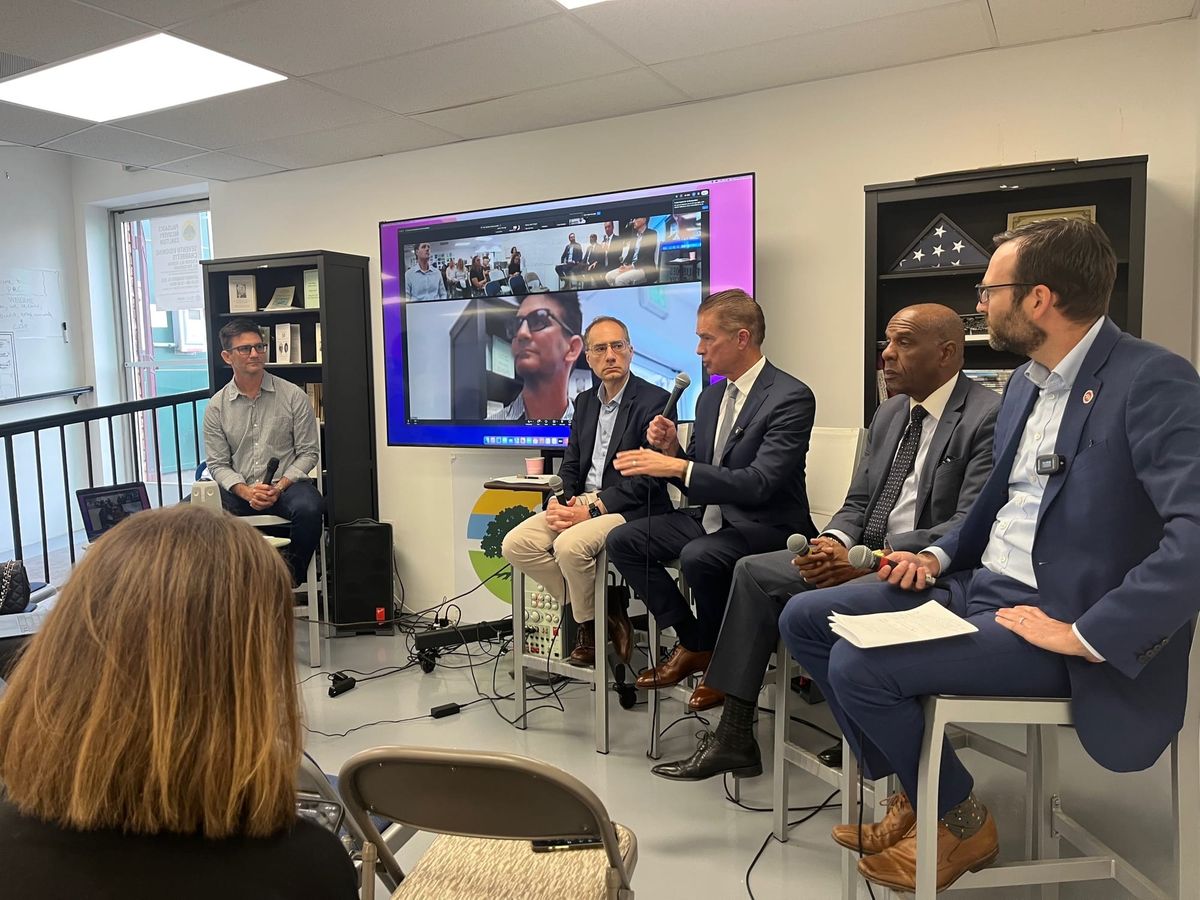
At a high-stakes candidate forum covered by the Santa Monica Daily Press, Pacific Palisades residents heard a blunt reframing of their rebuild from the candidates vying to represent them: insurance — not permits, not design review, not construction capacity — will decide whether the neighborhood comes back. The forum, held months into one of the most complex residential reconstructions in California history, reduced a sprawling policy conversation to a single operational question. Can a homeowner secure coverage for what they intend to build? If the answer is no, the rebuild does not happen, regardless of what the drawings show or what the lot is worth.
The Compliance Stack Behind the Coverage Question
The insurability question is not abstract. It now runs through three specific frameworks that carriers, regulators, and certifiers are using to sort California homes into priced tiers. The Safer from Wildfires regulation, issued by the California Department of Insurance, requires every admitted insurer to offer discounts tied to twelve specific mitigation measures — from Class A roofs and ember-resistant vents to defensible space and non-combustible five-foot perimeters. Each measure is individually priced into the policy.
Layered on top is the 2026 California Wildland-Urban Interface Code, which becomes mandatory on January 1, 2026 for all new construction inside Fire Hazard Severity Zones — a designation that covers much of the Palisades. And above that sits the IBHS Wildfire Prepared Home standard, a voluntary certification whose PLUS designation is recognized by Mercury, USAA, Travelers, and Chubb as qualifying for material premium reductions — in Mercury's case, up to 50% off the wildfire portion of the policy.
A rebuild that hits all three frameworks is a rebuild that can be insured — and, in many cases, insured at a lower rate than the wood-frame home that stood on the same lot before. We walked through the numbers in our analysis of the 3% fire-resistant home construction premium that unlocks up to 50% insurance savings. A rebuild that hits only the minimum code may not find a carrier at all on the admitted market.
Why the Material Decision Is the Insurance Decision
The Palisades conversation has often been framed as a permitting problem or a capacity problem. The candidates' reframing points somewhere more specific: the decisions that determine insurability are made at the structural and envelope level, and they are made early. A wood-framed rebuild with wildfire add-ons is a fundamentally different risk object than a non-combustible concrete home built under the 2026 WUI Code — even if both technically clear the code.
Insurance is no longer a post-construction paperwork step. It is a design input.
This is the shift that candidates, whether they intended it or not, put on the record. Insurance is no longer a post-construction paperwork step. It is a design input — arguably the first one, ahead of style and even ahead of program. For buyers evaluating a rebuild in Pacific Palisades, Malibu, Altadena, or any of the WUI-zoned neighborhoods now facing the same math, the consequential variable is what the building is made of. Material determines envelope. Envelope determines rating. Rating determines whether the asset is financeable and whether the homeowner ever gets the keys.
What Comes Next
The Palisades will be the reference case for how California rebuilds in fire-exposed geographies. If the candidates are correct that insurance is the gating variable, the projects that move forward fastest will be the ones engineered from the first sketch to satisfy the carrier's underwriting model — not just the planning department's checklist. The rebuild is, quietly, becoming a conversation about concrete, vents, and defensible space long before it becomes a conversation about floor plans.