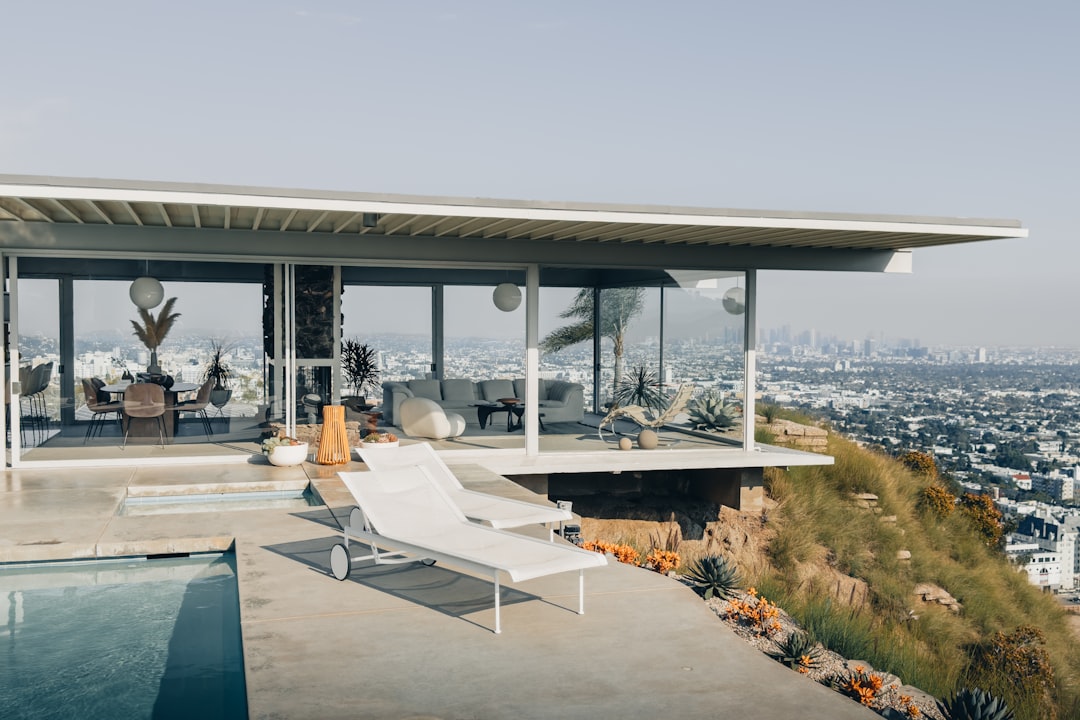
In 2025, California repriced its homeowners-insurance line in public. The California Department of Insurance approved the first 17 percent State Farm emergency rate increase, Mercury filed the state's first Sustainable Insurance Strategy rate plan, and the UCLA Anderson Forecast pegged total Palisades and Eaton property and capital losses at $76 billion to $131 billion. Yet the top of Beverly Hills still printed — $60 million at Ridgedale, $51.8 million at Alpine, $47.5 million at Benedict Canyon, $32.3 million at Wallace Ridge. The top cleared. But what cleared was the old regime, and that is the part worth reading carefully before a 2026 brief gets written.
The 2025 reset, in three filings
The regulatory year had three inflection points, and together they describe a shift, not a spike. In May, CDI approved a 17 percent State Farm emergency homeowners rate increase, conditioned on a $400 million parent-company cash infusion and a non-renewal moratorium through the end of 2025. In August, Mercury submitted California's first filing under the Sustainable Insurance Strategy — a 6.9 percent average increase paired with the first regulator-sanctioned use of the Verisk wildfire catastrophe model, and mitigation discounts capable of cutting up to a third off the wildfire portion of premium. In March 2026, a three-party settlement between CDI, Consumer Watchdog, and State Farm locked the 17 percent in place and extended the non-renewal moratorium at least another year. Read together, the three filings are a single signal: California is moving structure-level wildfire mitigation from alongside the rating formula to inside it. Every new-build brief written after this point is being drafted into the new formula, not the one the 2025 trades closed under.
What cleared in 2025 was legacy stock on legacy policies
The 2025 Beverly Hills top-tier was not a new-construction print list. It was a legacy-trophy list. In April, 1028 Ridgedale Drive — James Packer's Beverly Hills Flats estate — traded at $60 million, the year's priciest BH single-family print. The Real Deal's September TRD Data review logged Ridgedale alongside 942 North Alpine Drive at $51.8 million as the only two $50 million-plus Beverly Hills single-family closings of the year. In July, 1120 Wallace Ridge closed at $32.3 million — the priciest Trousdale Estates trade of 2025, a roughly 65 percent gain over the 2022 purchase price of $19.5 million. In September, 912 Benedict Canyon Drive closed at $47.5 million — a 17,000-plus-square-foot estate formerly owned by Rick Caruso, booking the most expensive US residential sale of that month.
Every one of these is an existing structure, built long before the 2026 California WUI Code was drafted, transacted on homeowners policies bound before the 2025 reset took effect. They cleared because the seller, the buyer, and the existing carrier could all price the structure under the prior regime. A $60 million trade closing in 2025 on a policy written in 2022 or 2023 is not a vote of confidence in the new rating formula — it has no reason to touch it. The CDI 17 percent, the Mercury SIS filing, the March 2026 settlement: none of them reach backward into a grandfathered renewal that has not come up yet. These prints are not a signal that the 3 percent hardening premium is priced in. They are the last chapter of the regime that premium was designed to replace.
The counter-print makes the same point from the other side. 73 Beverly Park Lane relisted at just under $80 million in December 2025 — an 11 percent cut from its May ask — stale trophy product, priced without a thesis, not clearing even in the 90210. In the legacy chapter, liquid legacy stock trades and indistinct legacy stock sits. Neither outcome tells a 2026 client anything about what their new commission has to deliver.
The 2026 ground-up brief starts on a different baseline
A Beverly Hills client commissioning a new home this year is not operating under the regime that closed Ridgedale or Wallace Ridge. A ground-up permit pulled in 2026 designs into the 2026 California WUI Code on day one, into an admitted market where Mercury's Sustainable Insurance Strategy plan is live and others are queued, and into a resale horizon where the next buyer's underwriter — not today's grandfathered carrier — will reprice the structure against the Verisk catastrophe model. The renewal letter that lands in 2028 will not be the renewal Packer's buyer just inherited. That is the specification problem every 2026 brief has to answer, even in the 90210.
What closes the gap is structural mitigation priced into the envelope from the start, not bolted on at the first non-renewal notice. The October 2025 Headwaters Economics and IBHS Altadena study found high wildfire-resistant construction adds only 2 to 3 percent over traditional cost — roughly $15,000 on a $500,000 Altadena build. In Beverly Hills, where construction already runs far above the Altadena baseline, the 3 percent is a smaller line still, and it is the line that buys alignment with all ten Safer from Wildfires measures, the Mercury SIS discount pathway, and the IBHS Wildfire Prepared Home Plus standard at once. The same 3 percent that is a rounding error on a $30 million-plus build is the difference between a renewal that is routine and a renewal that becomes the next non-admitted-market problem.
The floor didn't move. The brief did.
Beverly Hills at the top did not reprice in 2025. The floor of what a $30 million-plus commission has to deliver did. The trades that cleared this year closed under rules that no longer apply to the next commission, and the 3 percent WUI-hardening premium is not a value-add the market is still debating — it is the entry fee to the 2028 renewal, and therefore to the trade after that. The question a client should bring to a 2026 brief is not whether a trophy home can still clear at $60 million in Beverly Hills. It can. The question is whether a home being commissioned this year will still be insurable, standing, and liquid when its first full renewal lands on a desk that prices mitigation inside the formula, not alongside it. That is a different specification, written on a different baseline — and it is the one every new brief has to start from.