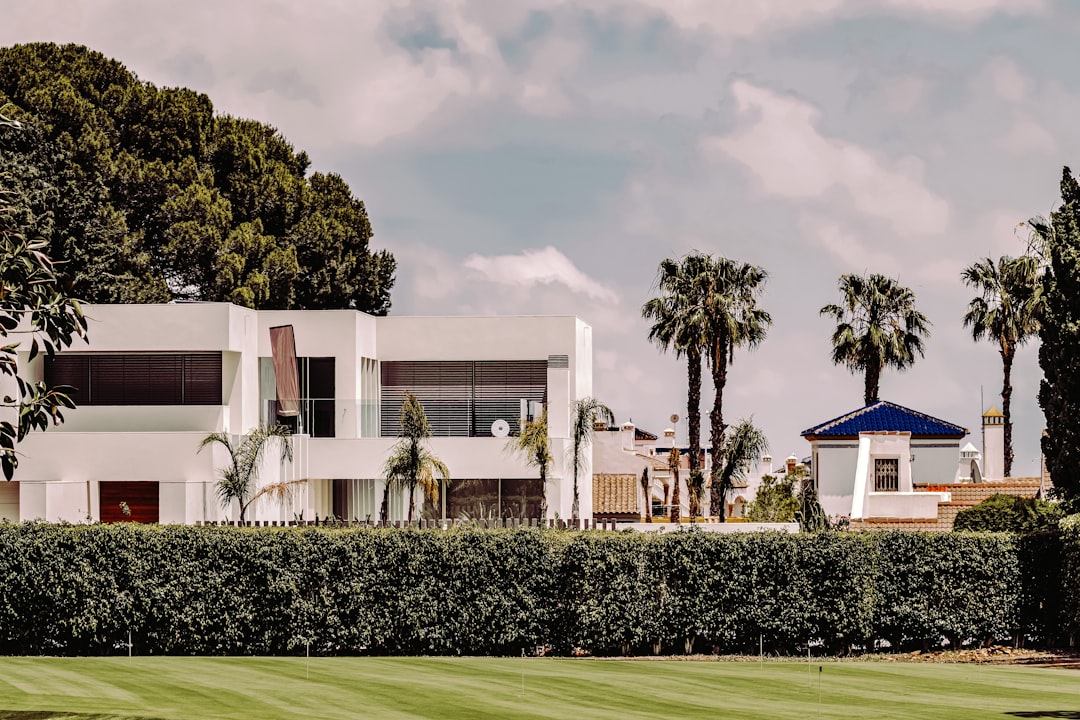
In March 2025, CAL FIRE's revised Fire Hazard Severity Zone maps added portions of Beverly Hills — including blocks south of Sunset Boulevard — to California's Very High Fire Hazard Severity Zone, per Beverly Press. For a buyer signing a $30 million custom-build contract that same year, the map change meant one thing: the insurance underwriting that had long applied to Malibu and the Palisades now applied to the 90210 itself.
The question for anyone commissioning a ground-up home in Beverly Hills in 2026 is no longer whether wildfire risk is priced into the pro forma. It is — by the carrier, by the lender, and by the next buyer. The real question is what construction choice best compresses that risk line before it ever reaches the renewal notice.
The Beverly Hills cost baseline — and what a 3% premium actually buys
Per JDJ Consulting's 2025 Los Angeles cost guide, LA luxury residential construction runs $450 to $650-plus per square foot. Beverly Hills is not LA-average: BH pricing runs 20 to 30 percent above that baseline — call it $540 to $845 per square foot for a properly-detailed custom build — and the market has absorbed roughly a 44 percent increase in residential construction cost over the last five years.
Against that baseline, the cost premium for a reinforced-concrete envelope over a comparable wood-framed build falls in a three to five percent band. At $700 per square foot, that is $21 to $35 per square foot — roughly $300,000 to $500,000 on a 15,000-square-foot house. It is, in other words, a line item, not a thesis.
The thesis sits on the other side of the ledger.
The insurance side of the ledger, after the 2025 reset
California's Safer from Wildfires regulation requires admitted carriers to offer premium discounts tied to ten home- and parcel-level mitigation measures — from Class A roofing and ember-resistant vents to the five-foot non-combustible zone around the foundation. That framework is the baseline. The 2025 reset — the California Department of Insurance's approval of the first forward-looking catastrophe models under the Sustainable Insurance Strategy — is what changed the scale of the discounts carriers are now willing to file.
In August 2025, Mercury Insurance submitted California's first homeowners rate filing under that strategy. The filing extends wildfire-mitigation discounts to as much as one third of the wildfire portion of premium for a home that combines structural mitigation with membership in a fire-prepared community. For a Beverly Hills policy where the wildfire portion is the dominant line item — the norm for a property now inside or adjacent to the Very High Fire Hazard Severity Zone — that is a number that compounds across the life of the asset.
Above that carrier floor, the IBHS Wildfire Prepared Home Plus standard, updated in June 2025, is the highest third-party designation available. IBHS has been explicit that Plus is the tier designed for new construction — and that it adds specific requirements for enhanced protection against radiant heat and direct flame contact beyond the Base level. A ground-up Beverly Hills custom build is, in effect, the ideal candidate for the Plus designation. The retrofit path is hard; the ground-up path is a set of decisions made on the first set of drawings.
The built precedent — concrete is not theoretical in this market
Concrete residential in the Beverly Hills / West Hollywood corridor is no longer a specification question answered with a bespoke fabricator and a six-month RFI log. In April 2025, Olson Kundig's Concrete House at 8899 Beverly debuted at $5.75 million — 2,962 square feet of panel-formed, site-cast reinforced concrete and exposed structural steel, presented not as a resilience demonstration but as a design language. That is a useful data point: when an architect of Kundig's stature builds a ready-to-sell concrete residence in the corridor, the supply chain, the trades, and the buyer audience are all already in place.
At the ultra-luxury scale, Aman Residences at One Beverly Hills — starting at $20 million with average pricing around $7,000 per square foot, a Southern California record — markets fire-resistant construction as a design feature. The top tier of buyer is not only willing to pay for insurable structure; they are being sold on it.
The alternative — generic spec at the top
The cautionary print in the 2025 Beverly Hills market is Eli Sasson's 620 Arkell Drive, reported by The Real Deal. Listed at $88 million in 2022, the completed spec did not clear, and in August 2025 the developer refinanced at $33.4 million days before a foreclosure auction. Un-differentiated spec product at the top tier is not a safe trade anymore — even in the 90210.
Read together with the priced-to-sell Packer estate print and the $7,000-per-foot Aman residences, the 2025 Beverly Hills signal is consistent: the top of the market still clears, but only where the build itself carries a thesis. Insurability, under the 2025 SIS regime, is the thesis with the most durable math behind it.
What the 2026 Beverly Hills custom-build brief looks like
For a buyer commissioning a Beverly Hills custom home in 2026, the construction-cost decision is no longer a choice between two wall assemblies. It is a choice between two twenty-year cost curves. Wood-frame at $700 per square foot, renewing into a tightening carrier environment, with the next buyer's quote as the open question. Or reinforced concrete at roughly $720 to $735 per square foot — up to 33 percent off the wildfire portion of premium under the Mercury SIS filing, a credible path to IBHS Plus, and a next-buyer's underwriting file that answers itself.
On a $20-million-plus Beverly Hills build, the three-percent premium is the smallest cost decision in the project. It is also, after the March 2025 map update, the one that determines whether the asset is still insurable in 2046.