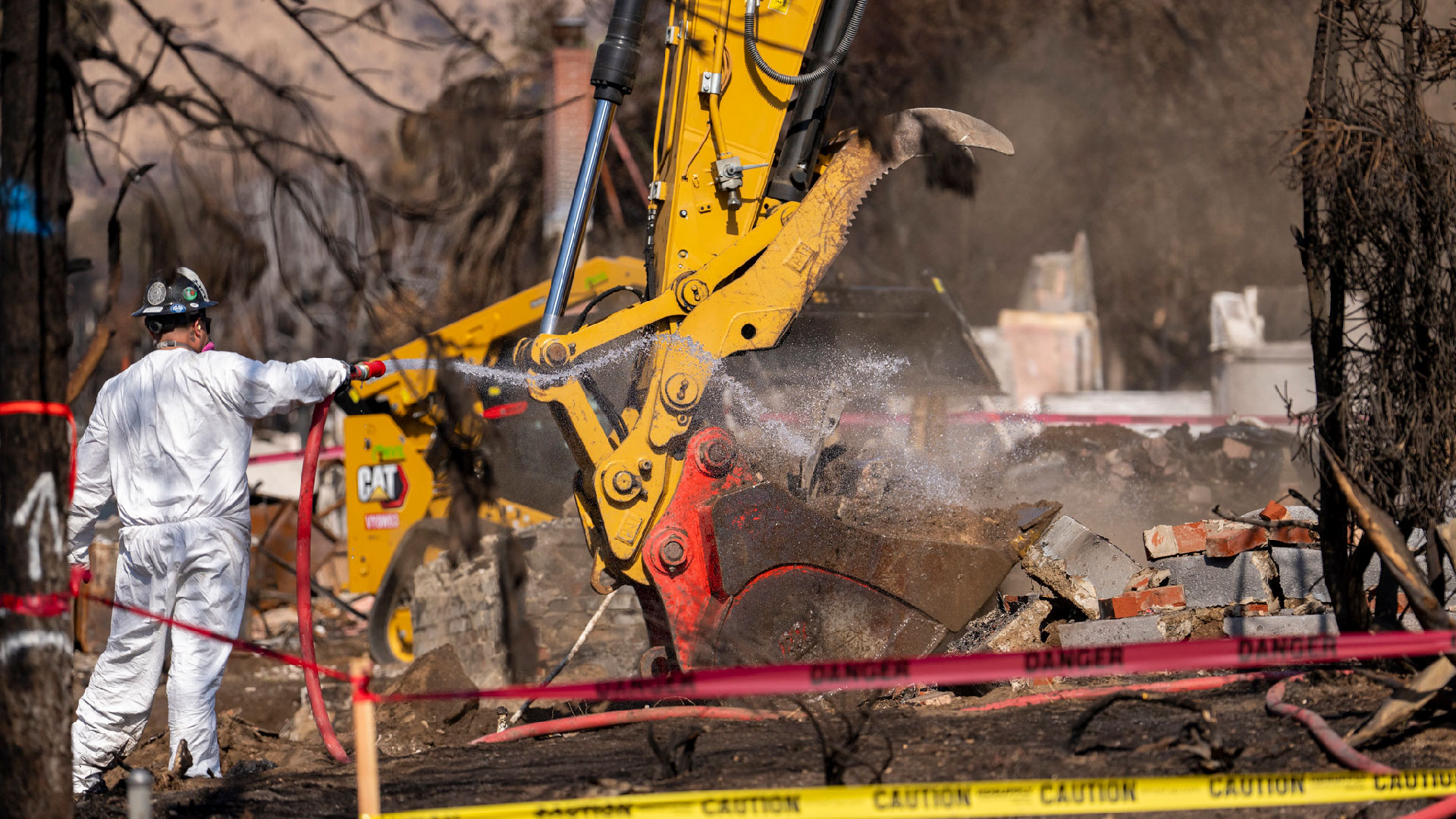
More than a year after the Eaton Fire swept through Altadena, rebuilding stories are beginning to shift from loss to method. A recent Spectrum News 1 report profiles an Altadena couple who are embracing advanced construction technology as the framework for rebuilding their home — a choice that says as much about the current state of Los Angeles reconstruction as it does about their individual project.
The piece, part of Spectrum's ongoing Homebound series tracking Eaton Fire recovery, documents how technology-driven planning, digital modeling, and resilience-minded specifications are becoming central to how displaced Altadena homeowners are approaching the rebuild — not peripheral.
The data behind the shift
The Eaton Fire, which ignited in January 2025, destroyed more than 9,400 structures across Altadena and surrounding foothill communities, according to Los Angeles County's official recovery dashboard. The scale of loss — concentrated in a single, dense residential footprint — has made the Eaton zone a real-time laboratory for how Southern California rebuilds in Very High Fire Hazard Severity Zones.
ignited in January 2025
across Eaton burn zone
mitigation measures
Two regulatory frameworks now shape every rebuild decision in the zone. The first is California's Safer from Wildfires program, which requires insurers to offer premium discounts when homeowners adopt any of 12 specified mitigation measures — from Class A roofing to ember-resistant vents to a non-combustible five-foot perimeter. The second is the 2026 update to California's Wildland-Urban Interface (WUI) Code, which takes effect for new construction in designated zones and tightens requirements on cladding, openings, and defensible space.
Together, these frameworks have quietly rewritten the baseline for what qualifies as a permittable — and insurable — rebuild in Altadena, Pacific Palisades, Malibu, and Topanga. We traced the same shift in our note on concrete homes in Los Angeles under the 2026 WUI Code. The Spectrum profile suggests homeowners are internalizing that shift faster than the market generally assumes.
What it means for the LA market
The interesting signal in the Altadena story is not the specific technology used — it is the framing. The homeowners are not approaching the rebuild as a stylistic exercise ("restore what was lost") but as a performance exercise ("build to a new standard"). That is a meaningful cultural shift. For decades, the default Los Angeles rebuild logic was architectural continuity with incremental code compliance. What is emerging now, across multiple burn zones, is the opposite: owners treating reconstruction as a chance to structurally re-engineer the envelope, the systems, and the site.
Practically, this changes the conversation with architects, insurers, and lenders. A rebuild specified from the start to meet Safer from Wildfires, the 2026 WUI Code, and voluntary standards like IBHS Wildfire Prepared Home has a fundamentally different insurability profile than a like-for-like replacement — and an increasingly different appraisal profile as comparable sales accumulate in the burn zones. Technology is the enabler, but the decision underneath it is about material and method; we ran the numbers in our piece on the 3% fire-resistant home construction premium that unlocks up to 50% insurance savings.
The longer view
As more Eaton, Palisades, and Malibu rebuilds move from permit to construction over the next twelve months, the homes completed first will set the reference point for everything that follows — visually, financially, and in underwriting terms. The Altadena couple profiled by Spectrum are part of a small, early cohort whose decisions will echo well beyond their own lot line. The rebuild era in Los Angeles is no longer a question of if new standards take hold. It is a question of which owners move first.