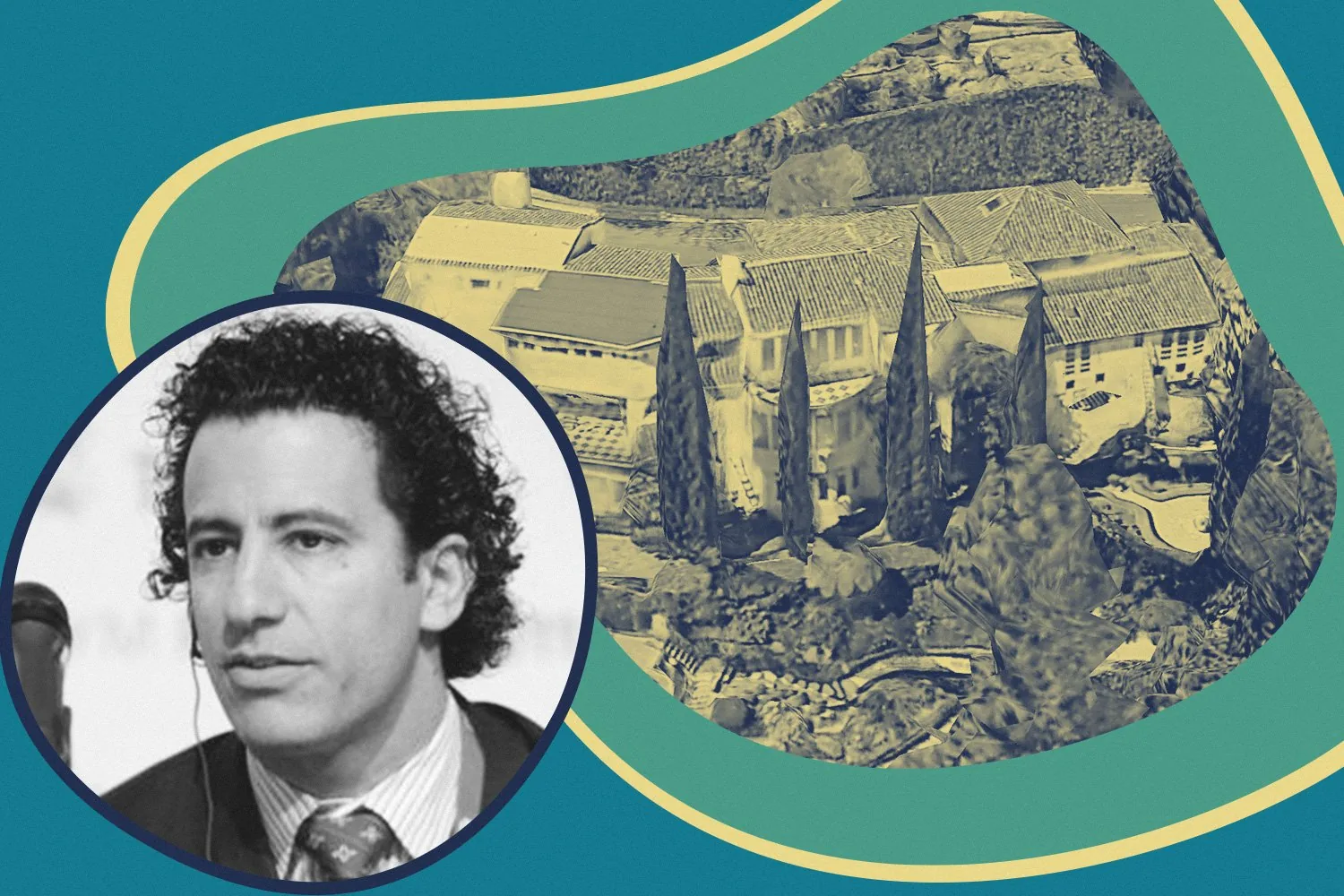
A 98-year-old Spanish-style estate at 10772 Chalon Road has come to market in Bel Air at $32.5 million, following a renovation that ran for years. The Real Deal reported the listing on 14 September 2026, citing Mansion Global, and noted the detail that gives the house its position in the market: it was built for the founder of the Bel Air enclave itself.
That provenance is doing real work in the price. A trophy listing on the Westside normally sells square footage, view corridors and newness. This one sells lineage — the first generation of a planned neighborhood, the founder's own address, and a fabric old enough to have acquired a biography.
What the 1920s built
Bel Air was laid out in the 1920s as a designed enclave, and the houses of its founding decade were overwhelmingly Spanish Colonial Revival and Mediterranean in language. That was not only taste. It was an accurate reading of the site: a chaparral hillside with hot, dry summers, strong seasonal winds and long sun. The type answers all three — heavy plastered walls, small punched openings with deep reveals, clay barrel tile over timber, loggias and courtyards that make outdoor rooms in the shade rather than glazed rooms in the glare.
Estates of that vintage in Los Angeles were typically built as load-bearing masonry or hollow clay tile finished in cement plaster, with heavy roof structures and steel casements. The proportional consequence is what buyers actually feel when they walk in: window reveals a foot or more deep, so light arrives softened and edged in shadow; rooms sized by structural bay rather than by open-plan ambition; stair halls that organize movement instead of dissolving it. These are qualities that cannot be retrofitted into a thin-walled house, because they are a by-product of how the wall was made.
They also come with a bill. Pre-1933 masonry in California predates the seismic reforms that followed the Long Beach earthquake, so serious work on a house of this age begins with strengthening — and strengthening is invisible in photographs.
The real cost is the calendar
The Real Deal's framing — a $32.5 million ask after a yearslong renovation — is the most instructive line in the story. New construction can be sequenced in parallel: engineering, procurement and fabrication advance while the site is prepared. Restoration of a heavy masonry estate sequences serially, because discovery drives design. You open a wall, you learn something, you redraw. Every new duct, conduit and sprinkler line is a chase cut into a structure that was never detailed to receive services. Foundations, chimneys and roof framing are each their own project.
So the premium being asked here is not merely for finishes. It is for time already spent, and for risk already retired by someone else. At the $30 million-plus level in Bel Air, that is a legitimate product: a century-old house with intact proportion, mature landscape and a modern service life, delivered without the buyer having to live through the discovery phase.
What it signals for the Westside market
Bel Air, Holmby Hills and Beverly Hills now offer two distinct products at the top of the market, and they are converging on similar prices from opposite directions. One is the authored pre-war estate, where value rests on scarcity, address and the spatial generosity of an older structural logic. The other is new construction, where value rests on performance, certainty and specification — envelope, energy systems, insurability.
The interesting part is that the old house wins on the metric buyers rarely name: it proved it could be renewed. Masonry-walled, tile-roofed, courtyard-planned houses from the 1920s are the survivors of a neighborhood that has demolished a great deal of its architecture. The lightly built houses of later decades have not aged into trophies; they have aged into teardowns. Provenance is only available to buildings whose structure outlives fashion.
For anyone commissioning new work on the Westside, that is the useful lesson from a 98-year-old listing. The design decisions that determine whether a house becomes a landmark or a lot are made at the structural level, in the first set of drawings, decades before anyone writes the listing copy.
The pre-war estate inventory in Bel Air is finite and shrinking, which means the premium attached to it should continue to widen. What that leaves open is the more demanding question for 2026: which of the houses being permitted on these hillsides today will still be worth restoring in 2124 — and which will simply be cleared for the next one.
Source: The Real Deal, "Mansion built for Bel Air founder listed for $33M after yearslong reno," 14 September 2026 (citing Mansion Global).