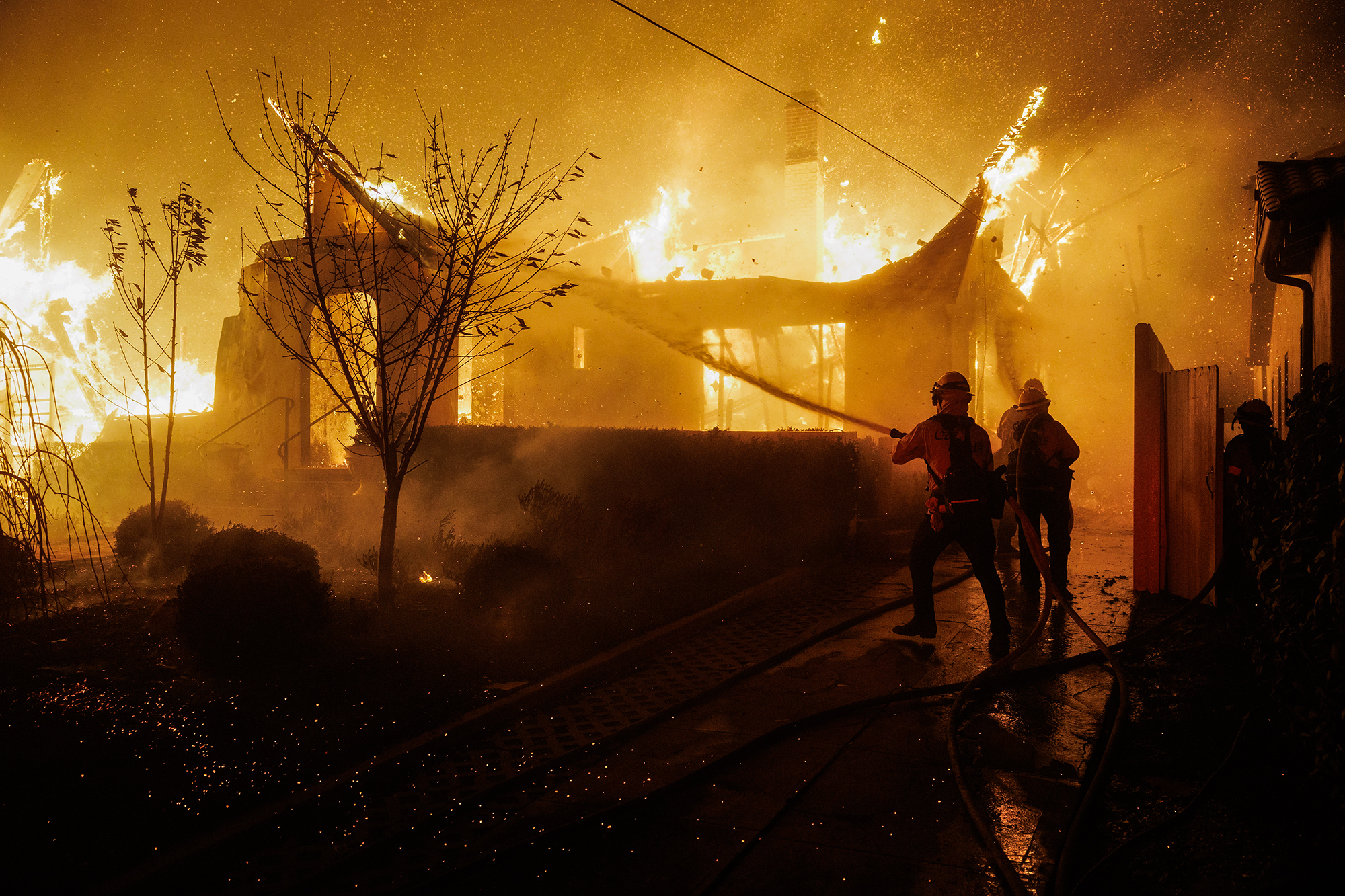
California's Department of Insurance has opened a formal investigation into State Farm's handling of claims from the January 2025 Palisades and Eaton fires, following sustained complaints from policyholders over delays, underpayments, and disputed scopes of loss. The probe was reported by CalMatters in June 2025 and targets the largest homeowners insurer in the state.
For the ultra-high-net-worth segment rebuilding or commissioning new construction in Los Angeles, the investigation reframes a question that property hardening alone cannot answer: even if your home is insurable, will the carrier behind the policy actually perform when it matters?
The data behind the probe
State Farm is the largest homeowners insurer in California by market share and reported approximately $7.6 billion in insured losses from the January 2025 Los Angeles wildfires, according to reporting by CalMatters. Those losses preceded — and partly motivated — the 17% emergency rate increase on California homeowners policies approved by the Department of Insurance in May 2025, as documented by the Los Angeles Times.
The investigation, conducted through the Department's market conduct authority, focuses on whether the carrier complied with California's fair-claims-handling regulations in its response to Palisades and Eaton survivors. The Department of Insurance has paired the probe with broader enforcement activity tied to the January fires, including directives on additional living expense payments and reconstruction cost disputes.
State Farm insured losses from Jan 2025 LA fires
Emergency rate hike approved in May 2025
State Farm's rank in CA homeowners market
The subtext matters: the carrier with the deepest exposure to the LA fires is also the one whose claims-handling conduct is now under formal review. That is not a coincidence of scale — it is a structural feature of a market where the largest books are also the most concentrated in fire-exposed geographies.
What it means for the LA market
Insurability has, until recently, been discussed in binary terms: can you get a policy, or are you forced onto the FAIR Plan? The State Farm investigation introduces a second axis that buyers on the Westside and in Malibu are now having to price in — carrier performance risk. A policy from an admitted carrier is only as valuable as the carrier's willingness and capacity to pay on contested claims.
For a commissioning buyer, that changes the calculus in two concrete ways. First, carrier selection becomes a diligence item alongside coverage limits and deductibles — broker relationships, surplus-lines options, and high-value specialists (Chubb, PURE, Cincinnati, AIG Private Client) look different when a top-tier admitted carrier is under market-conduct review. Second, the physical characteristics of the home itself gain new weight. The less ambiguous the post-event condition of a structure, the less surface area there is for a claims dispute to develop. Non-combustible assemblies do not just reduce the probability of loss; they reduce the contestability of loss.
That second point is under-discussed, and it is where construction choice intersects with insurance conduct in a way that most buyers have not yet internalized.
Looking ahead
The investigation's findings will not be published for months, and any enforcement outcome will take longer still. But the signal is already priced in for sophisticated buyers: in California, insurability is no longer a static property of the parcel or the policy. It is a live system involving carrier solvency, regulatory posture, mitigation credentials, and — most durably — the physical assembly of the home itself. The buyers underwriting new construction in 2026 are the ones treating all four as design inputs.