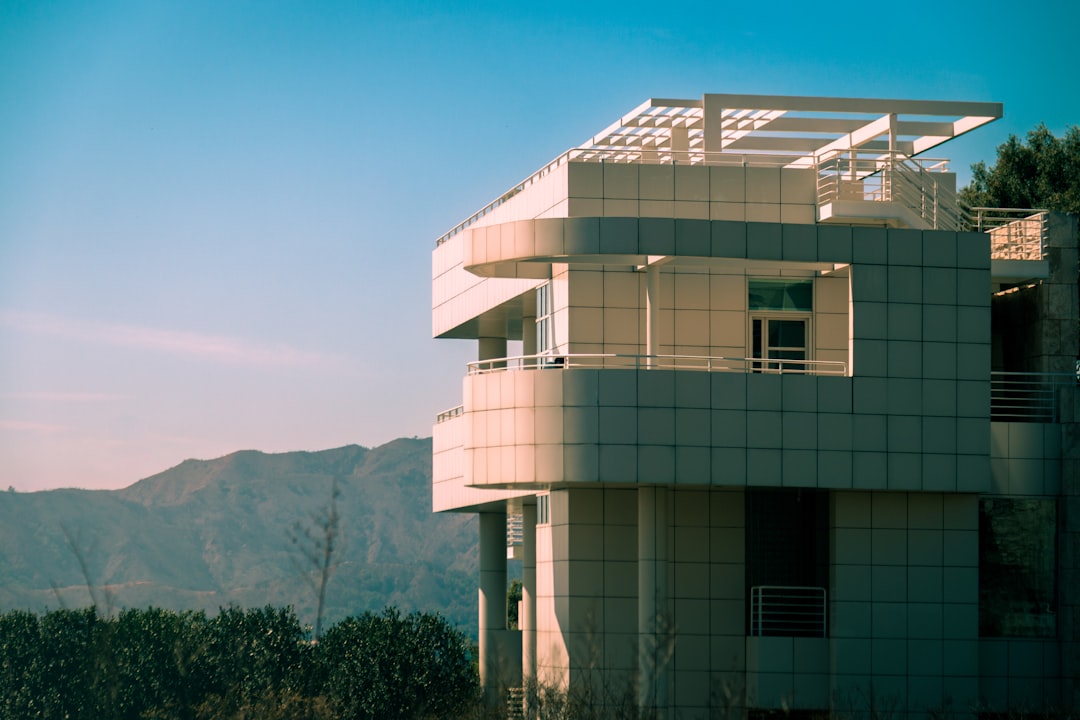
A short post from X user @wavetossed stated the case plainly: "Bricks, blocks, stone and concrete do not catch fire. And the science of reinforcing such buildings to protect against seismic activity is better understood than preventing stick houses from collapse. Reinforced concrete should be the default for California home construction." The post drew limited engagement, but it articulates a structural argument that has been quietly gaining ground in California luxury construction — that the dominant residential building system, light wood framing, is the variable beneath both the state's wildfire losses and its insurance retreat.
The structural argument, examined
The factual core of the claim is uncontroversial. Concrete, brick, stone, and concrete masonry are non-combustible materials — they do not ignite, do not contribute fuel to a fire, and do not propagate flame across an assembly. FEMA's P-737 guide identifies ember intrusion into combustible components — exterior walls, eaves, decks, vents — as the dominant ignition pathway in wildland-urban interface fires. A non-combustible envelope removes most of those pathways by definition, before any mitigation product is bolted onto the assembly.
The seismic half of the argument is the part most readers find counterintuitive. Reinforced concrete is often associated, in the public imagination, with catastrophic collapse in earthquakes — an inheritance of mid-century non-ductile frames in countries with limited code enforcement. Modern California practice is governed by ACI 318, the American Concrete Institute's building code, which prescribes detailing for seismic design categories matching California's hazard. Properly detailed reinforced concrete shear-wall systems are among the most thoroughly studied structural typologies in earthquake engineering, with extensive performance data published by the Pacific Earthquake Engineering Research Center at UC Berkeley.
U.S. code governing seismic-detailed reinforced concrete
Combustibility of brick, block, stone, and concrete
First full year under California WUI Code Title 24, Part 7
Why "default" is the operative word
California has not historically built single-family homes in reinforced concrete for reasons that have little to do with engineering and a great deal to do with labor markets, supply chains, and the cost structure of a residential industry organized around wood. Concrete carpentry, formwork, and reinforcement detailing require trades that are common in commercial construction and rare in single-family work. The result is a market in which non-combustible residential structure is treated as exotic, even though it is the standard for hospitals, schools, and cultural buildings in the same seismic zones.
The 2026 California Wildland-Urban Interface Code — Title 24, Part 7 — is now in its first full operating year, and it regulates surfaces and openings rather than structural systems. A wood-framed house with the right exterior cladding, vents, and roof can comply. So can a concrete house. The code defines a floor, not a ceiling, and the question @wavetossed raises is whether the floor is set in the right place for a state whose two largest residential hazards are fire and earthquake.
What changes in the Los Angeles luxury market
At the top of the Westside and coastal market, the calculus is shifting. A reinforced concrete envelope removes the dominant ignition pathway, satisfies WUI surface requirements natively, and — when designed with shear-wall and diaphragm detailing per ACI 318 — provides seismic performance that is well-characterized rather than novel. The premium over wood framing is real, but it is paid against an asset class where insurability, durability, and long-term value retention are increasingly the constraints that determine whether a home can be financed, insured, and resold at all. For buyers commissioning new construction in Malibu, Beverly Hills, and the Westside canyons, the question is no longer whether concrete is technically feasible. It is whether the alternative still makes engineering sense in 2026.
A quiet inversion
The most interesting feature of the argument is that it inverts the burden of proof. For most of the last fifty years, anyone proposing concrete for a California house has been asked to justify the departure from wood. The next decade may invert that question — asking instead why a house being built in a fire-exposed, seismically active state should be made of a material that burns. The answer that emerges will be written less by codes than by underwriters, appraisers, and the homeowners who do the math.