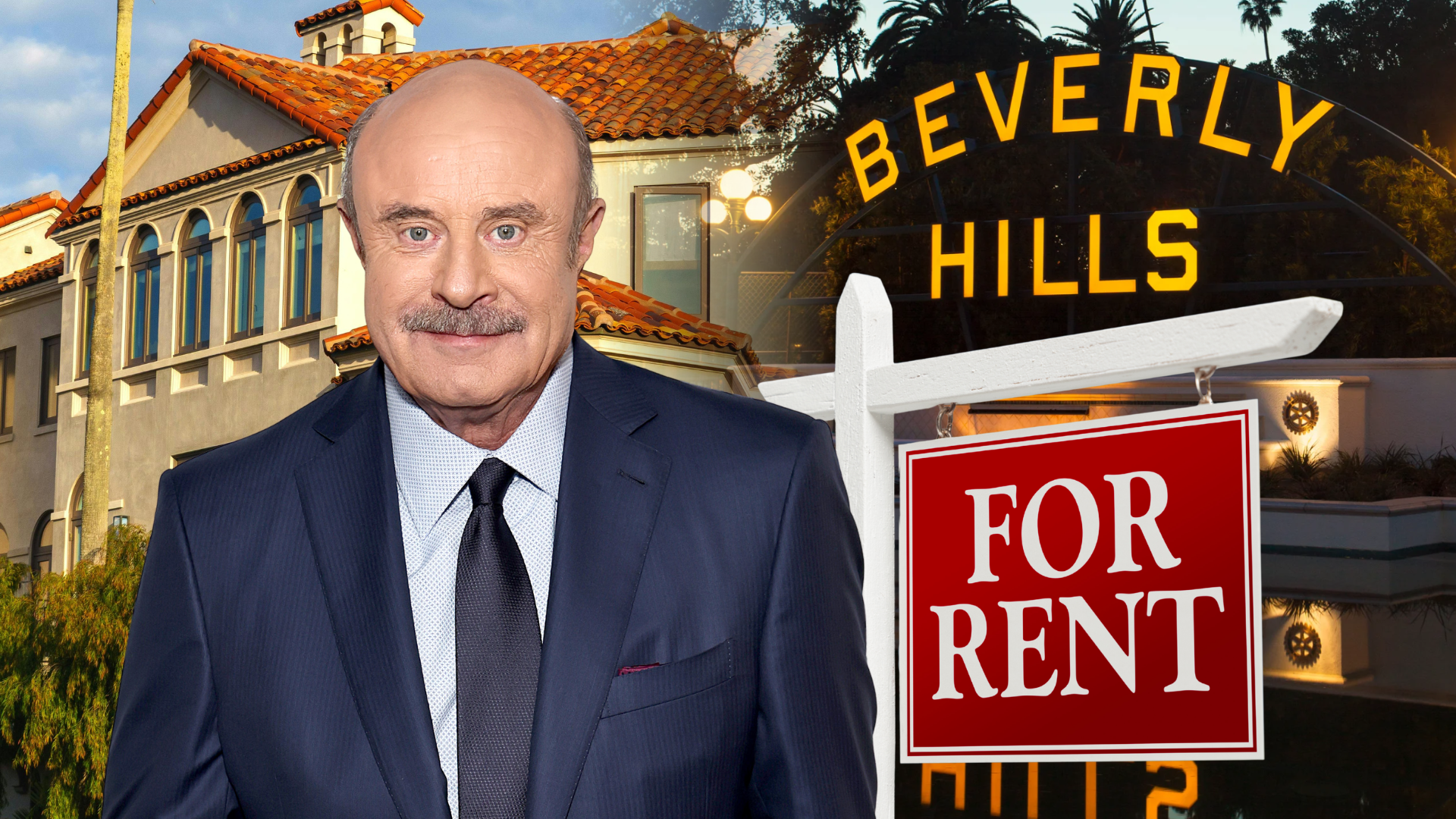
A Beverly Hills residence once occupied by television personality Dr. Phil McGraw is back on the market — this time as a rental listed at $65,000 per month. According to Entertainment Now, the property is described as a "Mediterranean villa" set firmly inside the 90210 ZIP code, and it now joins the upper tier of Los Angeles luxury lease listings.
The framing is instructive. "Mediterranean villa" has become one of the most durable marketing labels in Southern California real estate — a shorthand for warmth, arches, tile roofs, and courtyards. But as a description of value, the phrase carries a quiet ambiguity: it tells you what a home looks like, not what it is built from.
The data behind the label
The Mediterranean and Italianate typology has anchored Los Angeles luxury for a century, from Beverly Hills estates to Malibu bluffs. Its appeal is real: the courtyard house, the portico, the pergola are proven strategies for climate, light, and privacy. Yet in today's California market, aesthetic pedigree sits alongside a harder variable — insurability.
California's insurance landscape now prices resilience explicitly. Under the state's Safer from Wildfires framework, insurers are required to offer discounts for each of 12 mitigation measures a home adopts, from Class A roofing to ember-resistant vents and defensible space. Separately, the IBHS Wildfire Prepared Home certification — the highest voluntary standard recognized by carriers — can unlock wildfire premium reductions of up to 50% with certain insurers.
$65,000 — monthly asking rent for the Beverly Hills Mediterranean villa (90210)
Up to 50% — potential wildfire premium reduction for IBHS-certified homes
12 — Safer from Wildfires measures insurers must reward
None of these frameworks ask what architectural style a home wears. They ask what its roof, walls, vents, and perimeter are made of — and how those assemblies behave under radiant heat and ember exposure.
What this means for the LA market
For Beverly Hills and the broader Westside, the lesson is that "Mediterranean" is becoming two markets in one. There is Mediterranean-as-finish — stucco and tile draped over conventional framing — and Mediterranean-as-system, where the same visual language is carried by non-combustible structure. To a tenant paying $65,000 a month, the distinction may be invisible. To an owner, an appraiser, or an underwriter, it is increasingly the whole conversation.
The style tells you what a home looks like. The material tells you what it will be worth to insure, maintain, and hold.
As underwriting tightens across Tier 1 luxury geographies, the homes that hold value are those whose resilience is structural rather than cosmetic. A courtyard villa is a beautiful thing to lease. It is a more durable thing to own when its envelope is engineered to the same standard as its facade.
That is the shift worth watching in 90210 and beyond: buyers moving past the label toward the assembly beneath it.