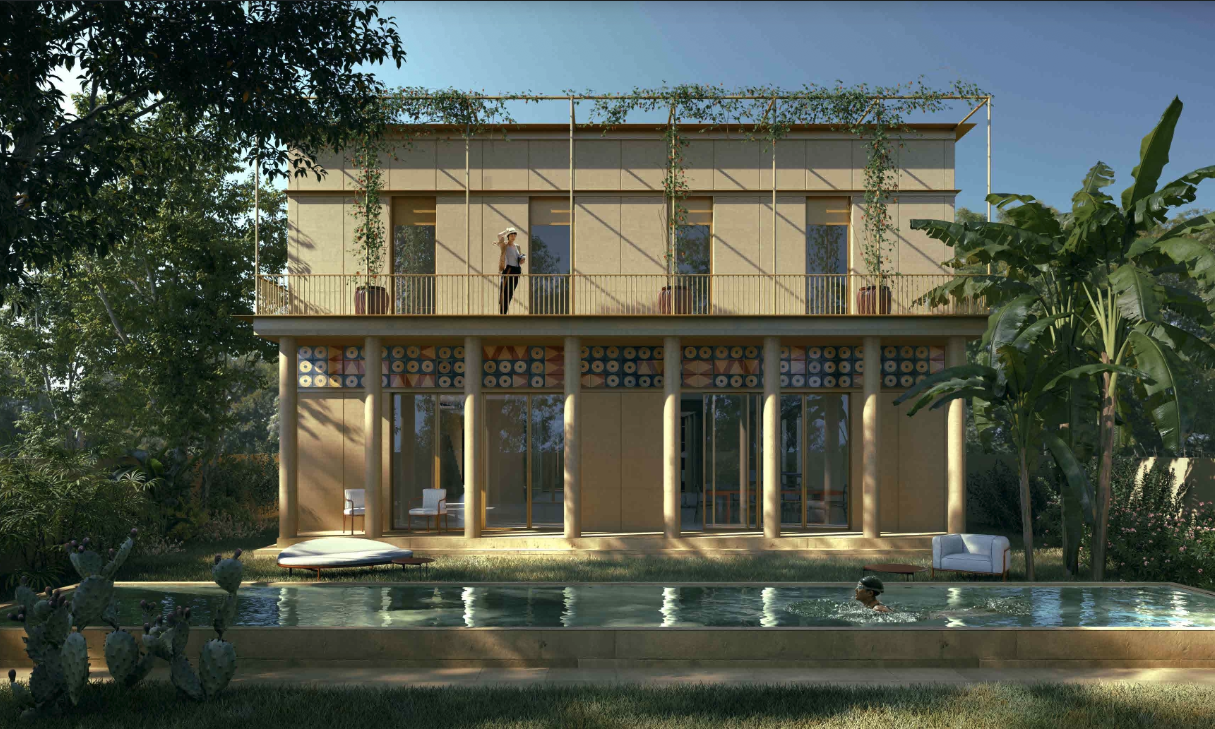
A residential project in California's Wildland-Urban Interface has been announced as the state's first home built to IBC Type I construction — a classification typically associated with hospitals, high-rises, and institutional buildings rather than single-family houses. The announcement came from Builtech Construction Group, posted on X with a link to the firm's project write-up, and framed the home as a new benchmark for wildfire-resistant residential construction (Builtech Construction Group on X, May 2026).
The home uses Insulated Concrete Form (ICF) walls as the primary structural envelope. What separates it from the broader ICF residential category is the deliberate pursuit of Type I classification — a code distinction that asks not only what the cladding is made of, but what the entire load-bearing structure is made of.
What Type I actually means
Under the International Building Code, construction is classified across five types (I through V), with Type I representing the most stringent category. Type I requires that the structural frame, bearing walls, and floor and roof assemblies be of noncombustible materials, with fire-resistance ratings of up to three hours for primary structural elements depending on subtype (International Code Council, IBC Chapter 6). Type V, by contrast, permits combustible framing — which describes the overwhelming majority of California single-family housing stock.
Most California WUI homes today comply with Chapter 7A of the state building code, which regulates exterior exposure: ignition-resistant siding, ember-resistant vents, Class A roofs, tempered glazing. Chapter 7A is meaningful, but it governs the surface of the building. It does not require the structural skeleton behind that surface to be noncombustible. A Chapter 7A-compliant home can — and usually does — sit on a wood-framed structure.
The classification gap. Type V construction allows combustible framing throughout. Type I requires noncombustible structural elements with rated fire-resistance assemblies. Chapter 7A sits on top of either — it does not change which one you start with.
Why this matters for the insurability stack
The California Department of Insurance's Safer from Wildfires regulation requires admitted carriers to recognize twelve mitigation measures across three layers: the structure, the immediate parcel, and the surrounding community (California Department of Insurance). Most of those measures are surface-level — roof, vents, eaves, defensible space. A Type I structure does not replace those requirements; it changes the baseline from which they are measured.
For underwriters, the practical question is whether the home in front of them behaves more like a wood-framed structure with hardened cladding, or like a noncombustible building with a refined exterior. Those two profiles age differently, repair differently after a brush event, and present different total loss probabilities. The first single-family Type I project in California gives carriers a residential reference point for the second profile — one that until now mostly existed in commercial and institutional portfolios.
The Los Angeles read
In Malibu, the Hollywood Hills, and the Westside canyon neighborhoods where insurance non-renewals have concentrated, the conversation about building has largely been a conversation about exterior assemblies. Owners ask which roof, which vent, which cladding. The Type I announcement reframes the question: it asks whether the structure under the cladding is rated at all.
That is not a small distinction for the high-value end of the market. A reinforced concrete or ICF envelope at Type I removes an entire category of risk — interstitial combustion, hidden cavity ignition, post-event structural compromise — that surface upgrades cannot address. Whether residential Type I scales beyond demonstration projects will depend on cost, design fluency, and the willingness of insurers to price the difference. The classification, at minimum, now exists at the single-family scale.
As more projects pursue the same path, the residential WUI conversation may shift from how to harden a combustible house to which buildings were noncombustible to begin with. That is a different vocabulary — and a different set of design starting points — than the rebuild market has been working in.