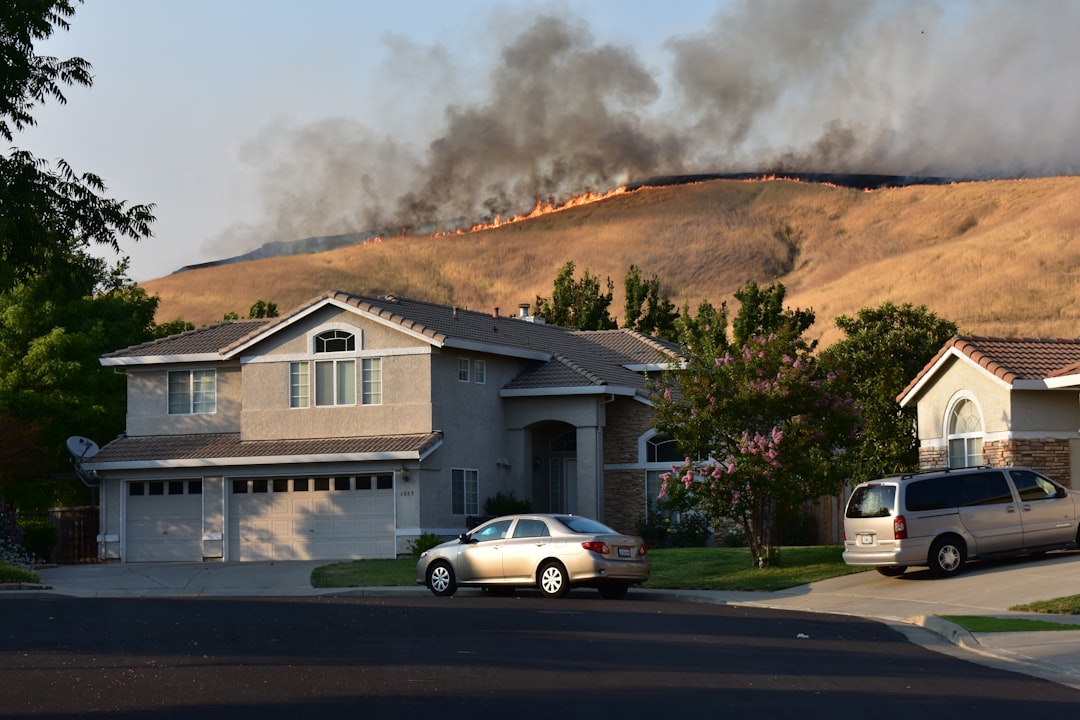
The Insurance Institute for Business & Home Safety (IBHS) has expanded the geographic footprint of its Wildfire Prepared Home program, with industry analysis showing approximately two million additional homes now fall within markets where the designation can unlock insurance discounts. The development was reported by Digital Insurance, citing IBHS data on the program's recent multi-state rollout.
For California homeowners — where the program first launched in 2022 and where carriers including Mercury already advertise wildfire premium reductions tied to IBHS designations — the news is less about new eligibility and more about what national standardization signals: the construction-based discount model is no longer a California experiment.
A standard that is becoming the default
IBHS launched Wildfire Prepared Home in California in 2022 with two designation tiers, Home and Home Plus, each tied to a defined set of structural and parcel-level mitigation measures. With the latest expansion, the program now reaches 13 states, according to Digital Insurance.
In California, the IBHS standard does not operate in isolation. It interlocks with the California Department of Insurance's Safer from Wildfires regulation, which requires admitted insurers to recognize 12 mitigation measures organized across three layers: structure, immediate parcel, and surrounding community. The IBHS designation is treated by California carriers as an aggregate qualifying standard — a single credential that signals compliance across multiple layers of the regulatory framework.
The IBHS program documentation details the technical requirements: a Class A roof, ember-resistant vents, a five-foot non-combustible zone immediately around the structure, and — at the Plus tier — non-combustible cladding and enclosed eaves. These are not aspirational guidelines; they are pass/fail criteria verified by third-party inspection.
What this means for the LA market
For the Los Angeles luxury segment — Malibu, Beverly Hills, the Westside canyons — the practical consequence of national standardization is that local carriers no longer have to argue with reinsurers about whether a California-specific credential is meaningful. When the same designation appears in 13 states, it enters reinsurance pricing models as a recognized variable rather than a regional curiosity.
That changes how new construction is evaluated. A buyer commissioning a custom home today is no longer choosing between "build to code" and "build to a discount." The discount itself has become the underwriting baseline. Homes that meet IBHS Plus criteria are increasingly the comparable; homes that do not require carriers to explain the gap.
The flip side is also visible. As the standard's footprint widens, the homes outside it — combustible eaves, vented attics, vinyl windows — become easier to identify, easier to price up, and easier to non-renew. The geographic expansion does not just add eligible homes; it sharpens the contrast for everyone else.
Looking ahead
If IBHS continues its current pace, the Wildfire Prepared designation will likely function as a national fire-equivalent of seismic retrofit standards within a few underwriting cycles. For California's high-value coastal and foothill markets, that means the question facing new construction is no longer whether to design to the standard, but how cleanly the design satisfies it without retrofits, exceptions, or negotiated workarounds.