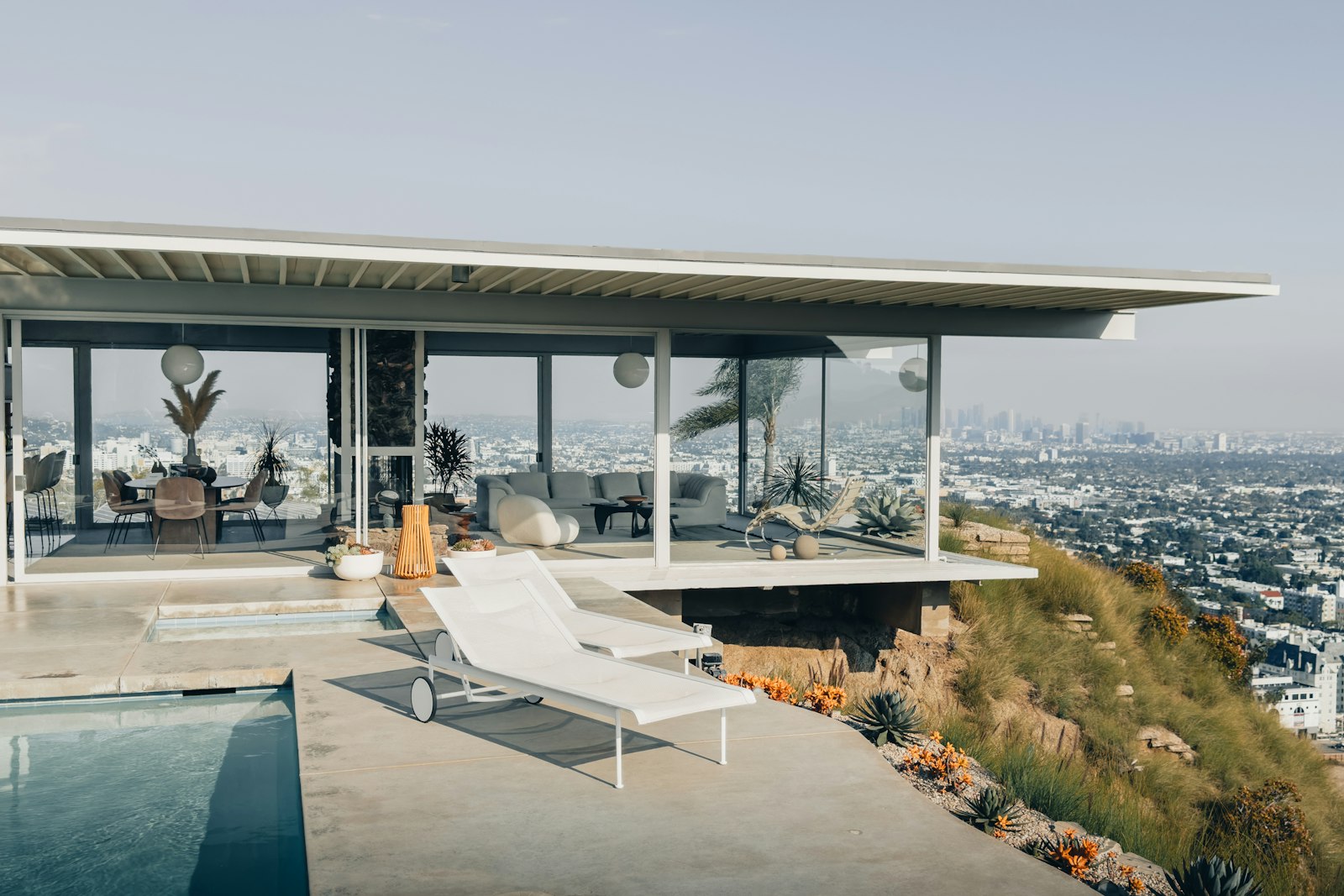
A Southern California luxury real estate team has published a buyer-facing brief arguing that fire-resistant construction features now function as a direct input into home value — not a defensive line item. The piece, by the Nicki & Karen team, frames hardened materials, Class A roofs, ember-resistant vents, and non-combustible cladding as appraisal-grade attributes that buyers and lenders actively price in fire-exposed Southern California markets.
The framing matters because it comes from the sell side. Appraisers, brokers, and buyers are the parties that ultimately set what a luxury home is worth on the open market, and their willingness to credit fire-resistant features determines whether hardened construction behaves as an expense or as an asset. Source: Nicki & Karen, "Boost Home Value with Fire-Resistant Features in LA".
What the brokerage brief actually claims
The Nicki & Karen analysis makes three connected arguments. First, that buyers in Southern California's luxury bands are now screening listings for fire-resistant attributes the same way they once screened for view, lot, and school district. Second, that appraisers are treating those attributes as comparable-eligible — meaning a hardened home is benchmarked against other hardened homes, not against the broader wood-framed inventory. Third, that the combination of insurance constraint and buyer behavior creates a price floor under resilient construction that does not exist under combustible construction. Source: Nicki & Karen.
That third claim is the most consequential. It implies a divergence in the Southern California luxury market between homes that can be financed, insured, and resold on standard terms and homes that cannot — with the construction envelope as the dividing line.
Potential appraisal premium for resilient construction
Mitigation layers recognized by California regulators
Safer from Wildfires measures rewarded by admitted carriers
The regulatory architecture behind the price signal
The brokerage argument lands on top of a regulatory structure that has been quietly reshaping California underwriting since 2022. The California Department of Insurance's Safer from Wildfires framework defines twelve mitigation measures across three layers — structure, parcel, and community — and requires admitted carriers to recognize them in rate filings. Source: CDI, Safer from Wildfires.
Layered on top, the Insurance Institute for Business & Home Safety's Wildfire Prepared Home and Home Plus designations function as an aggregate qualifying standard — a single certification that several California admitted carriers treat as a substitute for line-by-line mitigation verification. Source: IBHS Wildfire Prepared Home.
The result is that fire-resistant features are no longer just material choices — they are credentialed attributes attached to the building. That is what makes them legible to appraisers and brokers in the first place. A Class A roof is now a data point on a transaction, not a contractor preference.
What this means for the Westside luxury market
Read together, the realtor framing and the regulatory framework point in the same direction: the Southern California luxury market is bifurcating around the construction envelope. In Malibu, Beverly Hills, and the Westside generally, a buyer entering at the $10M–$30M band is increasingly buying two things at once — the home itself and a forward-looking insurability position that determines who will be able to buy it from them next.
Wood-framed homes in fire-exposed ZIPs are not unsellable, but their buyer pool narrows as carriers tighten, and their appraisal comps drift toward inventory carrying the same constraint. Hardened homes — concrete envelopes, Class A roofs, ember-resistant assemblies, certified mitigation — sit in a different comp set, with a different insurance arc, and a different liquidity profile in a downturn. The brokerage brief is reading that divergence in real time.
Fire-resistant features have crossed from cost line into value line — they now show up in the comp set, not just the contingency budget.
The signal worth watching
The interesting development is not that hardened construction performs better in a fire. That has been documented for years. The interesting development is that the sell side of the Southern California luxury market is now articulating it as a value proposition in writing. When brokers begin underwriting the envelope on behalf of buyers, the construction system stops being an architectural decision and becomes a transactional one — embedded in how the next decade of Westside luxury inventory will trade.