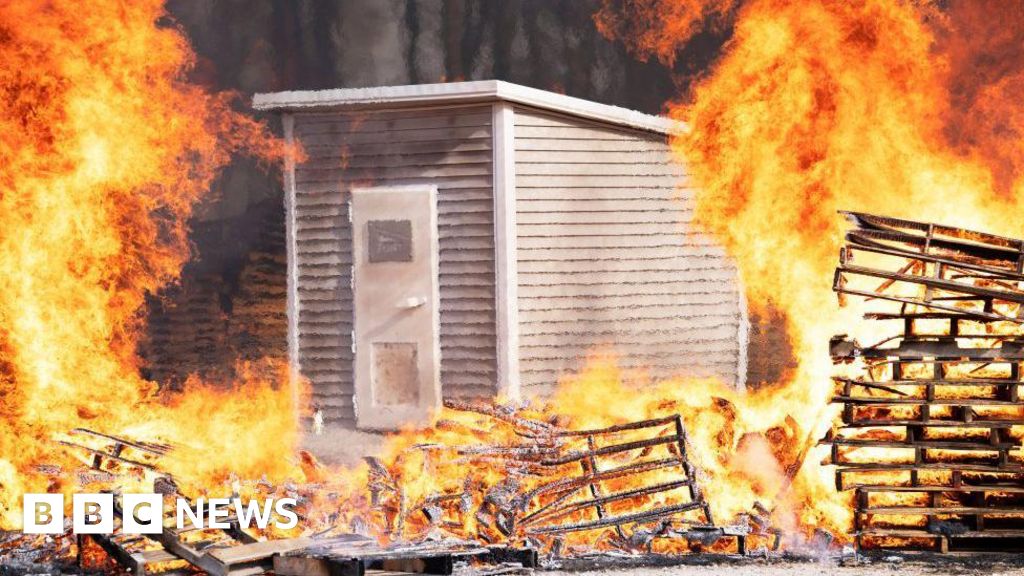
A new BBC feature profiles Holden Forrest, a Malibu entrepreneur with a background in real estate and construction who began developing resilient, fire-engineered housing in 2019 — the year after the 2018 Woolsey fire destroyed roughly 1,200 homes near his own. According to the BBC, the venture grew directly out of watching that fire move through a community he knew intimately. What began as a personal response has become a small commercial category, and the story is a useful window into how durable construction has moved from an architectural preference to a market demand in fire-exposed California.
The detail that matters is the timeline. The idea was conceived in 2019, well before California's insurance market reached its current strain. That sequencing tells you the demand did not originate with premiums — it originated with the event itself, and the insurance pressure followed.
From a single fire to a product category
The Woolsey fire's destruction of roughly 1,200 structures near Malibu, as reported by the BBC, is the kind of loss event that reshapes how a market thinks about construction. In the years since, the engineering consensus has clarified what actually drives those losses. Federal guidance in FEMA P-737 identifies ember intrusion — not direct flame contact — as the dominant ignition pathway in wildland-urban interface fires. Embers travel ahead of the front, find vents, gaps, and combustible surfaces, and ignite the home from points the owner never sees as vulnerable.
~1,200 homes destroyed near Malibu in the 2018 Woolsey fire.
2019 — the year the resilient-housing venture was conceived, ahead of the insurance crisis.
Ember intrusion is the dominant WUI ignition pathway (FEMA P-737).
That clarity has filtered into how risk is now priced. The IBHS Wildfire Prepared Home designation, recognized by California admitted carriers, is structured almost entirely around envelope and parcel performance — the assembly that decides whether a wandering ember finds purchase. A venture conceived in the aftermath of Woolsey and an underwriting framework written years later converge on the same variable: what the building is made of, and how its edges are detailed.
What it means for the LA market
The significance for Los Angeles is not the specific design featured by the BBC — it is the demand it represents. When a real-estate professional with hands-on construction experience decides the most rational response to wildfire is to re-engineer the structure itself, that is a market verdict, not a fringe idea. The Malibu and Westside buyer is arriving at the same conclusion through a quieter channel: insurability. A home built to a non-combustible standard is easier to underwrite, and easier to underwrite means easier to own.
The risk in the category is that "resilient" becomes a marketing layer applied to conventional construction rather than a structural fact. The FEMA and IBHS evidence points the other way — toward the materials and assemblies themselves. The buyers who internalize that distinction early will be the ones holding insurable assets when the next pricing cycle arrives.
The demand did not begin with premiums. It began with an event — and the structure was the only honest answer.
As more Southern California ventures organize around durable construction, the conversation will keep migrating from treatments and add-ons toward the building's fundamental material. The homes designed around that principle from the first drawing — rather than retrofitted toward it — will define what the next decade of fire-exposed luxury construction looks like.