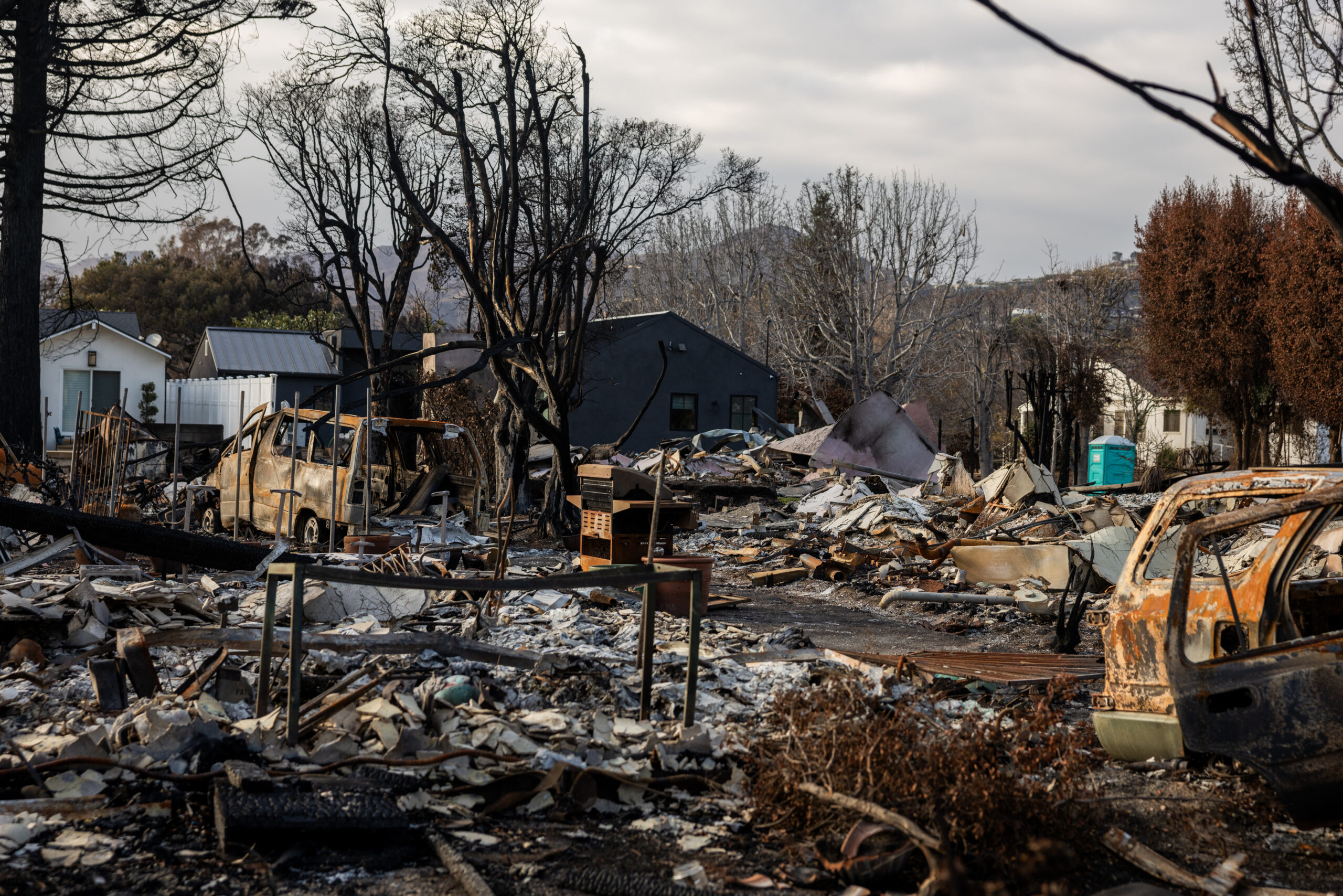
California has again postponed finalization of its Zone 0 ember-resistant perimeter rules, the five-foot non-combustible buffer around homes in the state's highest wildfire-risk zones. Insurance Journal reported in December 2025 that the Board of Forestry and Fire Protection now expects the final regulation no earlier than March 2026, pushing back a timeline that was already years overdue under AB 3074, the 2020 law that created the mandate.
For owners planning a new build or a rebuild in Los Angeles County — particularly in Malibu, the Palisades, Mandeville Canyon, and the hillside stretches of Bel Air and Brentwood — the delay leaves a regulatory target that is visible but not yet fixed. Permit sets are being drawn against a rule that everyone knows is coming but no one can cite verbatim.
A rule aimed at roughly two million homes
Zone 0 is the innermost ring of California's defensible-space hierarchy. Unlike Zones 1 and 2 — which govern vegetation and fuel management further from the structure — Zone 0 regulates what can exist in the immediate five feet around the house: no wood mulch, no combustible fences touching the structure, no vegetation that can ignite from an ember shower. Per Insurance Journal, roughly two million California homes sit inside the at-risk footprint the rule is intended to cover.
The California Board of Forestry and Fire Protection continues to publish draft language and procedural updates on the Zone 0 rulemaking, but the document has now slipped through multiple deadlines since AB 3074 passed in 2020. The concept, however, is not new to insurers. Zone 0 is already embedded in the Safer from Wildfires framework published jointly by the California Department of Insurance and CAL FIRE, where a clear five-foot non-combustible perimeter is one of the 12 mitigation measures carriers must recognize for premium discounts.
California homes in the Zone 0 at-risk footprint
Earliest expected date for final Zone 0 rules
Safer from Wildfires measures already buildable today
What the delay actually means in LA
The practical effect of the postponement is narrower than the headline suggests. The 2026 California WUI Code (Title 24, Part 7) takes effect January 1, 2026 regardless of Zone 0's finalization, and it already governs roofs, eaves, vents, exterior walls, windows, and decks in Fire Hazard Severity Zones. Insurers are also free to continue pricing Zone 0 compliance into their underwriting today — and many already do, through the Safer from Wildfires discount structure and through IBHS Wildfire Prepared Home certification, which requires a non-combustible five-foot zone as a prerequisite.
For luxury rebuild projects, the more interesting question is not whether to comply, but how much flexibility to design in. A drawing set submitted for permit in Q1 2026 will likely be built under the final Zone 0 rule — which means landscape, hardscape, fencing, and gate detailing near the structure should already anticipate the restriction. Teams waiting for the rule to land before revising their site plan are, in effect, planning to redesign the project twice.
The direction of travel is unambiguous: no combustible material in the first five feet of the structure, stricter vent geometry, Class A roofs, and non-combustible eaves. Every element of that list is already enforceable either through the 2026 WUI Code, Safer from Wildfires, or carrier underwriting. The Zone 0 rule, when it arrives, will codify what insurers have been pricing for years.
The planning horizon is longer than the rule
A home permitted in 2026 will be owned, insured, and resold under rules that will continue to tighten. California's fire regulatory trajectory has moved in one direction for twenty years, and the Zone 0 delay is a cadence issue, not a reversal. The buildings that age well in this environment are the ones designed to a destination specification — not to the permit sheet in force on the day the drawings were stamped.