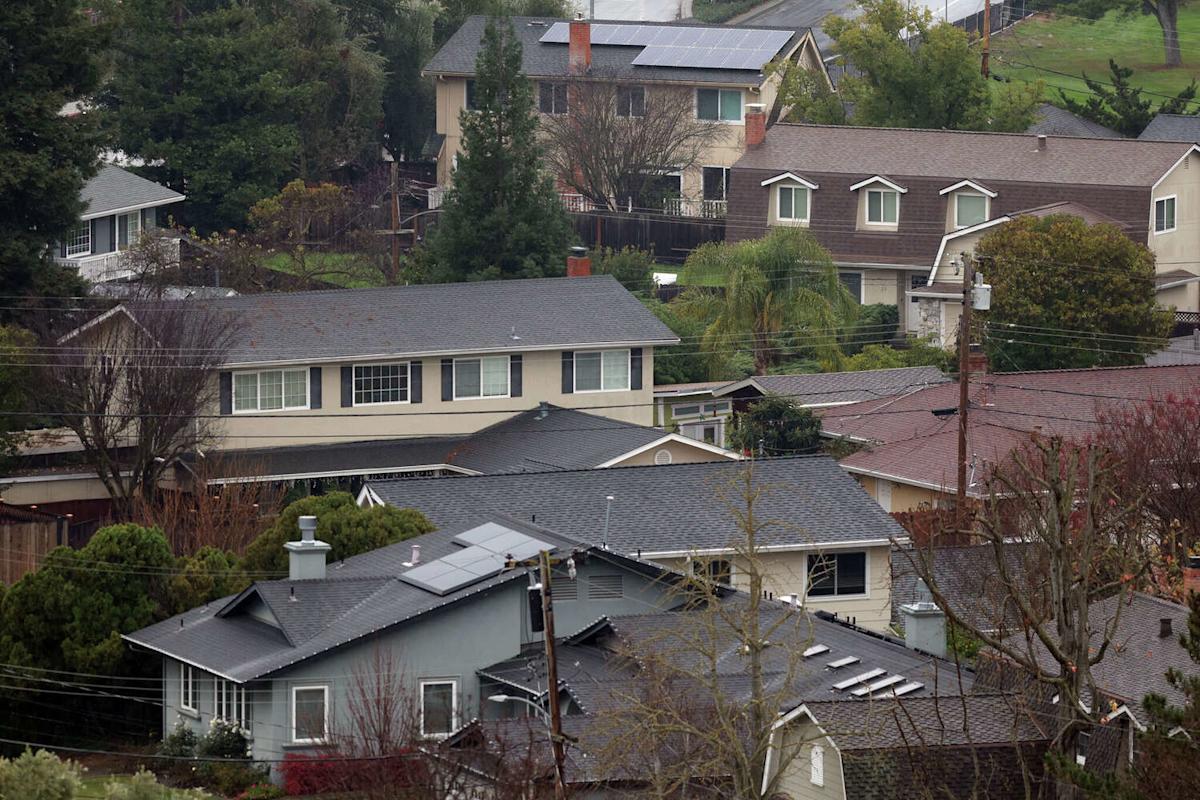
California's home insurance market has spent two years rewriting its rules in public — and one of the clearest signals just arrived in spreadsheet form. The San Francisco Chronicle, republished on Yahoo Finance, has compiled the underwriting guidelines of the 20 largest home insurers in California, mapping exactly which roof types each carrier will and will not cover. Together, those 20 companies collected roughly 90% of all home insurance premiums paid in the state in 2024, which makes their roof rules a de facto statewide standard for what is — and is not — an insurable home.
The headline finding is simple. The roof is no longer a finish decision. It is an underwriting decision.
What the dataset actually shows
The Chronicle's compilation, summarized in the Yahoo Finance piece, lays out carrier-by-carrier restrictions on common roof types — wood shake and wood shingle being the most consistently refused, with additional limits appearing around age of roof, condition, and certain composite or membrane assemblies. The reporting describes a market in which the 20 dominant insurers have converged on a narrower set of acceptable roof systems, with Class A fire-rated assemblies as the practical baseline for new construction and reroofs in wildfire-exposed zones.
That convergence does not exist in a vacuum. The California Department of Insurance's Safer from Wildfires regulation already obliges admitted insurers to offer discounts for 12 specific mitigation measures, with a Class A roof and ember-resistant vents among the most heavily weighted. IBHS's Wildfire Prepared Home designation — which Mercury, USAA, Travelers and others now reference in their California rating plans — treats the roof and the immediate eave and vent geometry as the foundation of the entire standard. The roof, in other words, is where the underwriting cascade begins.
What this means for the Los Angeles luxury market
For owners commissioning new construction in Malibu, Beverly Hills, Bel Air, the Palisades or the Westside canyons, the Chronicle data clarifies a question that has hung over every project since the 2025 fires: which decisions are aesthetic, and which are insurability decisions. Roof type is now firmly in the second category. So is what sits under the roof — the eave geometry, the soffit material, the vent specification, the wall assembly the roof terminates into.
The market implication is that the cost of an "unusual" roof choice is no longer measured only in dollars per square foot. It is measured in carriers available, in FAIR Plan exposure, and in the gap between admitted-market premiums and surplus-lines premiums over a 20-year ownership horizon. A wood shake roof on a $20M Malibu rebuild is not a design risk; it is a balance-sheet risk. The same logic now reaches down into materials that looked safe a decade ago — older composition shingles past a stated age threshold, certain tile installations without continuous underlayment upgrades, and roofs without enclosed eaves.
The carriers have, in effect, published a specification. The next 18 months of high-end LA construction will be judged against it.
The direction of travel
The Chronicle dataset is a snapshot of where the 20 largest California insurers stand today. The trajectory is unambiguous: roof rules will tighten, not loosen, as the 2026 WUI Code takes full effect and as IBHS Wildfire Prepared Home Plus becomes a more common reference point in rating plans. For luxury new construction in fire-exposed Los Angeles geographies, the most durable design decision a buyer can make in 2026 is to specify a non-combustible roof-and-envelope system that satisfies every framework at once — and stops being a variable carriers can re-price.