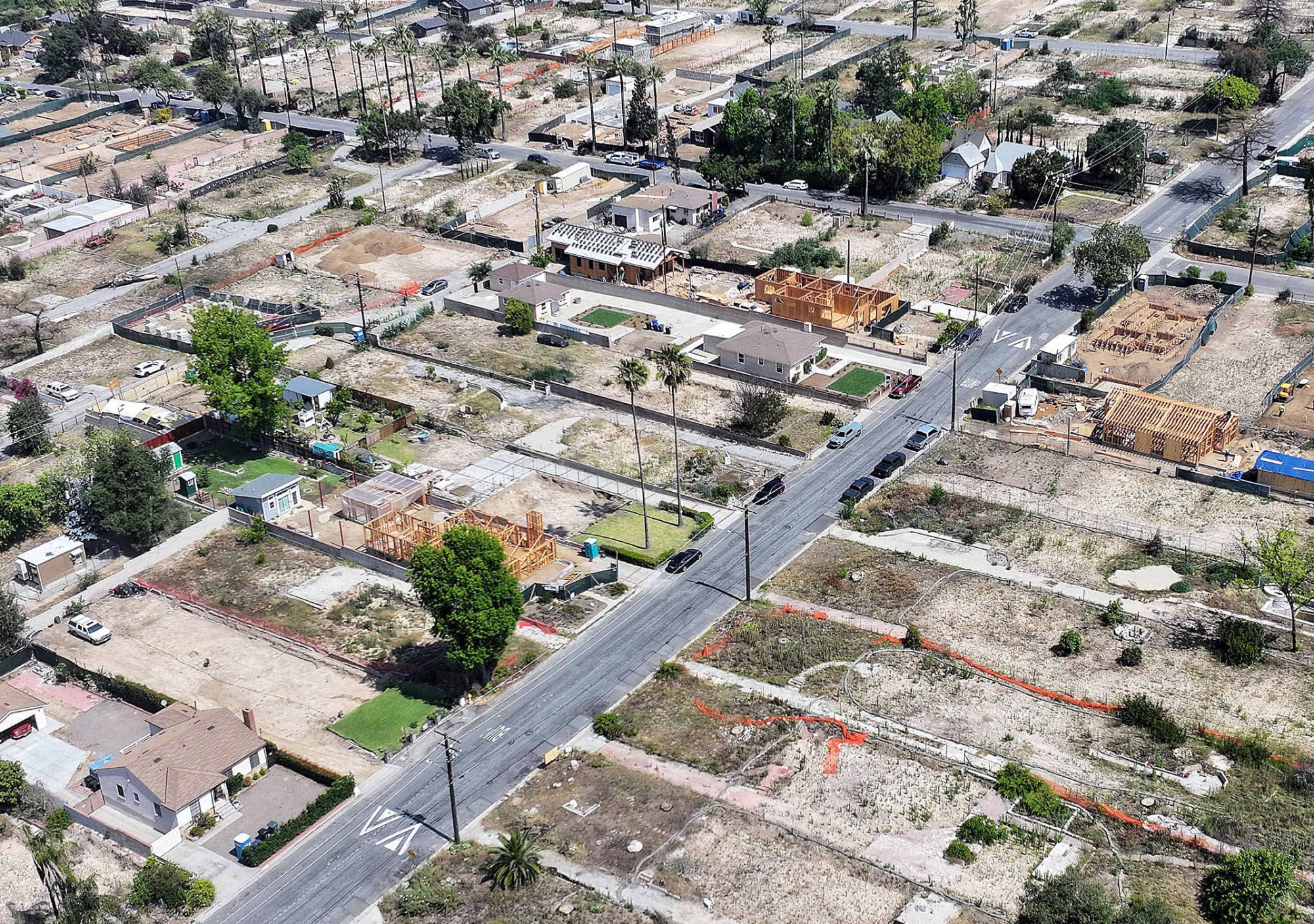
California's FAIR Plan — the state-mandated insurer of last resort — will raise rates by 29.1% for certain homeowners starting October 15, 2026, according to The Mercury News. The increase will fall hardest on properties in high-risk, fire-prone areas, including the Wildland-Urban Interface zones that cover much of Malibu, the Santa Monica Mountains, the Palisades, and the Westside canyons.
The FAIR Plan exists because admitted carriers — State Farm, Allstate, Farmers and others — have pulled back from California's most exposed neighborhoods. For many luxury homeowners, the Plan is no longer a backup. It is the only policy available. The 29.1% hike, layered on a coverage product already considered minimal, changes the cost-of-ownership equation for every fire-zone property in the state.
A backstop under strain
The FAIR Plan was designed as a temporary safety net. It has become structural infrastructure. Mercury News reports that the October increase is concentrated in high-risk, fire-prone tracts — exactly the geographies where admitted carriers have non-renewed most aggressively over the past three years. For homeowners in these areas, switching back to a standard policy is not a market option; the standard market is closed.
There is, however, a structural exit ramp. California's Safer from Wildfires regulation requires every admitted insurer to offer discounts for each of 12 specified mitigation measures — from Class A roofing and ember-resistant vents to a non-combustible five-foot Zone 0 perimeter. Above that floor sits the voluntary IBHS Wildfire Prepared Home and Wildfire Prepared Home Plus certifications, recognized by carriers including Mercury, USAA, Travelers and Chubb. Homes that achieve the full IBHS designation are increasingly being underwritten outside the FAIR Plan altogether — and at materially lower rates.
What this means for the LA luxury market
For a $10M-plus home in Malibu, Bel Air, or the Palisades, the FAIR Plan was always a poor fit. Coverage limits are capped, perils are limited, and premiums on a luxury structure quickly reach numbers that compound badly across a 20- or 30-year holding period. The 29.1% increase makes that math worse, not catastrophic — but worse in a direction that has been moving in one direction for five years.
The more consequential signal is what it reveals about underwriting. Rate hikes on the insurer of last resort are not noise; they are the clearest possible statement that the state-backed pool is absorbing more risk than its book can carry. The carriers that remain in the admitted market are watching the same data and pricing accordingly. The properties they will write — and write cheaply — are the ones engineered, at the framing stage, to remove combustible material from the assembly. Class A roof, non-combustible cladding, tempered glazing, vents that meet the Office of the State Fire Marshal's WUI listing, defensible space. These are not aesthetic choices in 2026. They are the variables the underwriter is reading.
The implication for new construction in Los Angeles is direct: the gap between conventional wood-frame builds and non-combustible assemblies is no longer a question of premium savings at the margin. It is the question of whether the home is insurable in the admitted market at all.
Looking forward
The FAIR Plan increase will not be the last. Insurers, regulators, and the IBHS are converging on a single underwriting language built around verifiable, photographable mitigation. Homeowners and builders who design to that language at the foundation stage will increasingly find themselves outside the FAIR Plan entirely — which, in the California of 2026 and beyond, is the most valuable place to be.