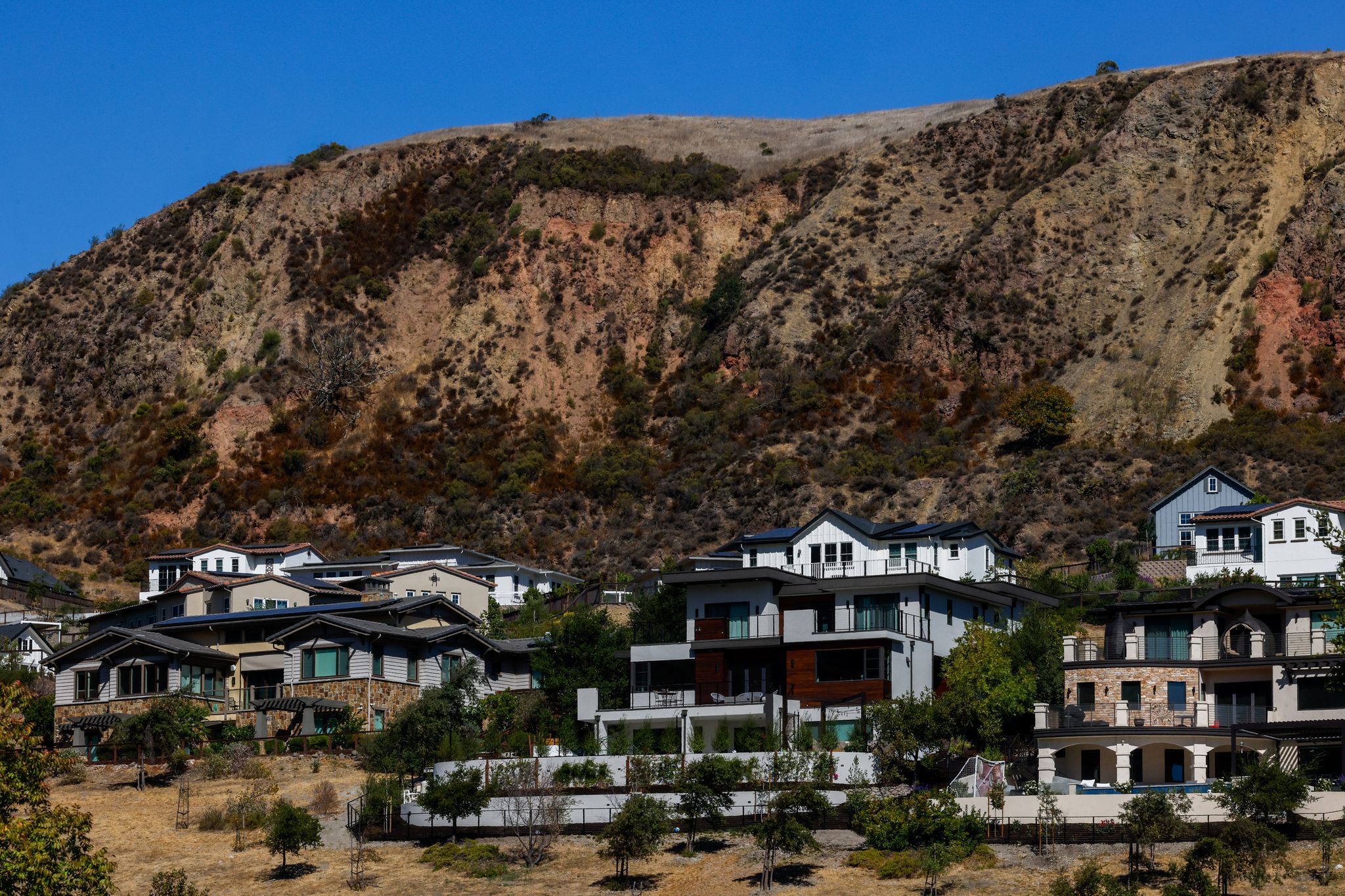
The California FAIR Plan — the state-chartered insurer of last resort — will raise residential rates by 29%, with the increase falling unevenly across the state's ZIP codes. The San Francisco Chronicle reported the approval and published a map showing where the hike concentrates: in the high-fire-risk corridors of the Sierra foothills, the Wine Country, and — most consequentially for the luxury market — the canyons and coastal hillsides of Los Angeles and Ventura counties.
The increase arrives against a backdrop the Chronicle has documented for years: State Farm, Allstate, and Farmers have all pulled back from writing or renewing California homeowners policies, pushing more residents onto the FAIR Plan and inflating its exposure faster than its premium base can absorb.
How the FAIR Plan got here
The FAIR Plan was designed as a residual market — a small backstop for properties no admitted carrier would write. It has become something else. As the Chronicle's coverage notes, the Plan's policy count and total exposure have multiplied as admitted carriers have either exited the state or stopped writing new business in fire-exposed ZIPs. The 29% rate filing is the regulatory consequence of that growth: a book heavily weighted toward fire-exposed, often wood-framed inventory cannot be priced like an ordinary residential pool.
29% — Approved FAIR Plan residential rate increase
3 — Major admitted carriers (State Farm, Allstate, Farmers) in retreat from California
2026 — First full year under California WUI Code Title 24, Part 7
The map matters as much as the headline number. According to the Chronicle's analysis, the increase is not uniform — it tracks the geography of fire exposure and, by extension, the geography of luxury inventory in the Santa Monica Mountains, the Malibu coast, the Palisades, and the canyons above Beverly Hills and Bel Air. Homes priced in the eight figures are not exempt from being insured on the FAIR Plan; many already are, often paired with a Difference in Conditions wrap for liability and contents.
What this means for the LA luxury market
A 29% increase at the residual market is not, in itself, a luxury-market story. The luxury-market story is what the FAIR Plan increase signals about the admitted market sitting above it. When the backstop is being repriced this aggressively, admitted carriers have less incentive to compete on price for marginal risks — and more incentive to write only homes that present a clearly differentiated risk profile. That is the mechanism by which insurability, not square footage or address, has become the binding constraint on high-end residential construction in fire-exposed Los Angeles.
The differentiation lever the admitted market reads is mitigation: Class A roof, ember-resistant vents, hardened glazing, non-combustible cladding, defensible space — and, increasingly, the structural envelope itself. The IBHS Wildfire Prepared Home designation and the California Department of Insurance's Safer from Wildfires framework give carriers a vocabulary for pricing those choices. The FAIR Plan exists for homes that do not speak that vocabulary.
For owners building or rebuilding in the Tier 1 luxury geographies — Malibu, Beverly Hills, the Palisades, the Westside canyons — the strategic question is no longer whether the FAIR Plan is acceptable as a permanent home for a policy. It is whether the home being designed today will, on the day of completion, present a risk profile that an admitted carrier wants to write at all.
A repricing, not a one-time event
The 29% hike is not a ceiling. It is a recalibration of a residual market that has been absorbing risk faster than it can price it, and admitted carriers are reading the same loss data the Plan is. The next twelve months will likely bring further rate filings across the admitted market — and a sharper separation between homes that are insurable on competitive terms and homes that are not. The construction decisions being made now will determine which side of that line a property sits on for the next thirty years.