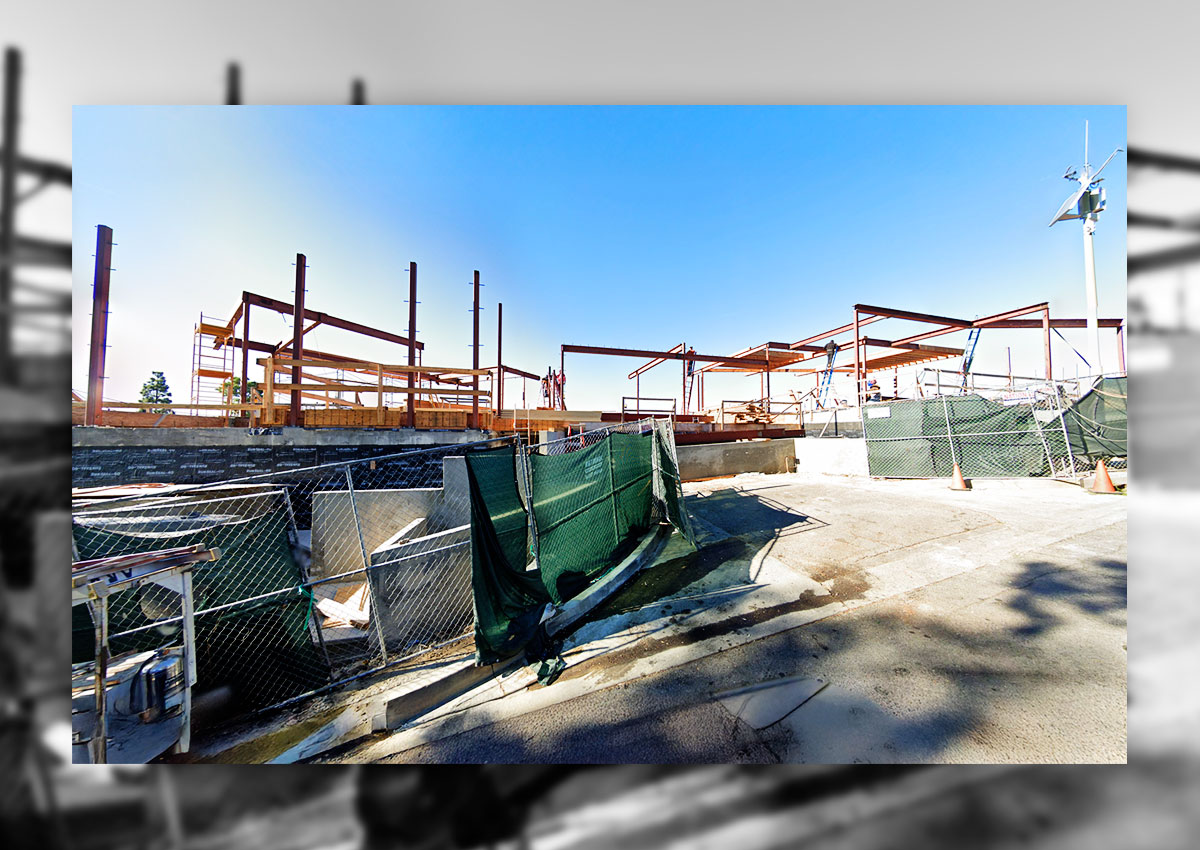
A $32 million Bel-Air mansion went into contract last week despite being actively under construction — and the deal led LA County's residential contracts that week, according to The Real Deal's roundup of top luxury contracts. The detail buried in the headline is the more interesting one: the buyer did not wait for completion, did not require staging, did not need to see finished interiors. The contract was signed against scaffolding.
That is a notable shift for a market that, until recently, treated in-progress construction as a discount factor rather than a feature. The $32M number is not the story. The willingness to transact mid-build is.
A Market Reading Construction as Information
The Real Deal's weekly LA County residential contracts list is one of the cleaner signals of how the city's ultra-prime market is actually behaving — not where listings sit, but where capital is committing. In that week's report, the Bel-Air manse topped the list while still in active construction, ahead of finished, photographed, professionally staged competition.
Bel-Air contract signed mid-construction
LA County's top residential contract that week
Westside band where spec construction now competes
A buyer transacting against an unfinished house is implicitly saying that the construction itself — the structure, the systems, the assembly — is legible enough to underwrite. That is a sophistication signal. It implies the buyer (or the buyer's representative) walked the site, read the structural drawings, evaluated the envelope, and concluded that the build was worth committing to before they could touch a finished surface.
Why This Matters for LA's Custom-Home Pipeline
For years, the conventional wisdom in Westside spec development was that the buyer arrived at the final 10% — fixtures, lighting, landscaping — and made decisions on the basis of finishes. That model assumes the buyer either does not care about, or cannot read, what is behind the wall. The Bel-Air contract suggests a different buyer is now active in the $20M–$50M band: one who is paying attention to what the wall is, how thick it is, what it is made of, how it was poured or framed, and what it implies for the asset over the next two decades of California-specific risk.
That has implications for how custom homes get specified at the front end. Spec builders working in Bel-Air, Beverly Hills, and the Malibu corridor have historically optimized for visual readiness at the listing photo. The shift visible in this contract suggests the next frontier of optimization is the build itself — the part that does not photograph but does underwrite.
It also reframes timing risk. A traditional concern about transacting mid-construction is that the buyer absorbs the schedule. But in a market where finished inventory above $20M is increasingly being repriced for insurance, climate, and code exposure, locking in a build that is already going through 2026 WUI Code review may be the lower-risk path, not the higher-risk one.
The Quiet Premium on Legible Construction
What we are watching, across the Tier 1 Westside geographies, is the slow emergence of a premium on construction that can be read and verified. Buyers who can evaluate a structural system are willing to commit earlier. Buyers who cannot are increasingly buying conservatively against the finished product — and the gap between those two cohorts is widening.
The Bel-Air contract is one data point. But it is consistent with a broader pattern in LA's top contracts over the last 12 months: the most decisive bids are landing on homes where what is being purchased is, in some real sense, the build itself.
Looking Ahead
If this becomes the dominant mode of trophy-home transaction in Bel-Air, Beverly Hills, and Malibu, it changes how custom homes should be designed and priced from the first sketch. The buyer is no longer arriving at the open house. They are arriving at the structural inspection. The next year of top-contract data will tell us how durable that shift is.